Attica Puts Audiences in the Middle of America’s Bloodiest Prison Riot
The new Showtime documentary Attica covers the 1971 riot at the Attica Correctional Facility. Award-winning filmmaker Stanley Nelson talks to Jacobin about the revolt and the state massacre that slaughtered prisoners and ended a movement for human dignity.
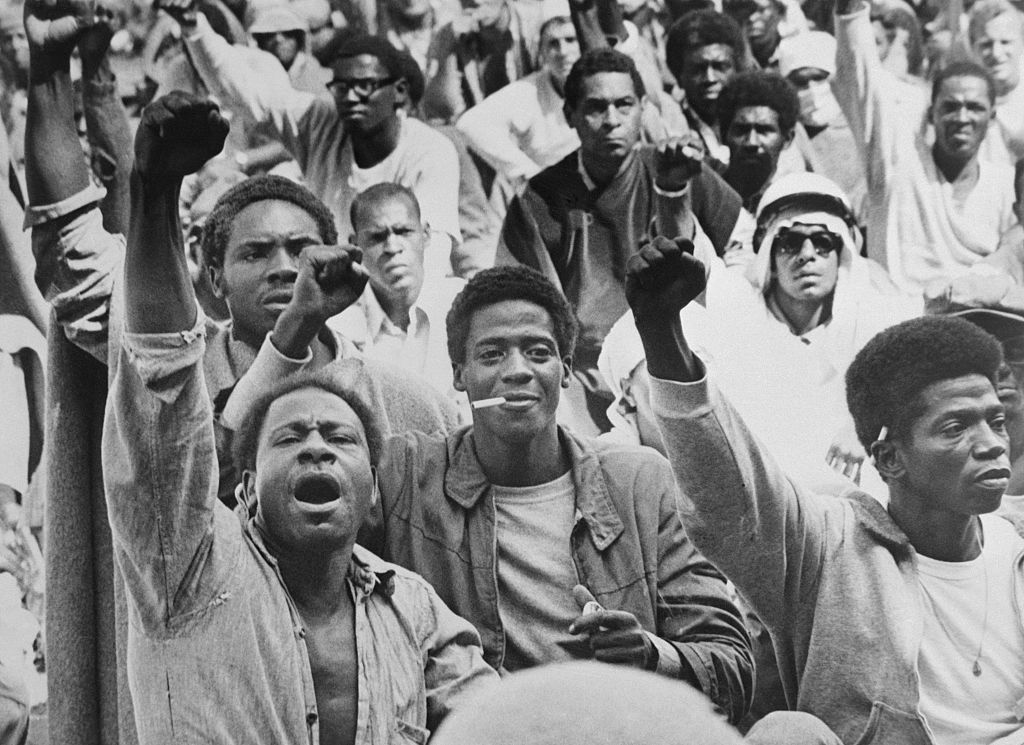
Inmates at the Attica Correctional Facility during the Attica prison right in 1971. (Bettmann / Getty Images)
Armed with archival footage, news clips, eyewitness commentary, home movies, and surveillance video, Stanley Nelson’s Attica draws viewers into America’s bloodiest prison revolt: the explosive 1971 riot at Attica Correctional Facility. The result is a gripping, you-are-there account compellingly told in the nearly two-hour Attica, which Nelson produced and codirected with Traci Curry, now playing on Showtime.
The Harlem-born-and-raised Nelson, who has earned three Emmy Awards, is among the world’s top documentarians. His films, often shot for PBS, include the civil rights and Black Power epics Freedom Riders (2011), Freedom Summer (2014) and The Black Panthers: Vanguard of the Revolution (2016).
With Attica, Nelson is tackling another landmark racial tragedy, wherein thirty-three inmates and ten prison guards and staffers were butchered, with many others injured and tortured during that horrific bloodbath a half-century ago. Nelson and Curry painstakingly disclose, blow by blow, what really happened, and they take viewers behind the scenes to the perfidious collusion between New York governor Nelson Rockefeller and President Richard Nixon that sealed the fate of not only the prisoners but their hostages as well. The filmmakers also reveal the heroism of the New Left’s courtroom gladiator William Kunstler; ABC News and Amsterdam News reporters John Johnson and Clarence B. Jones; and most of all, those courageous convicts who, like latter-day Spartacuses, stood up and insisted on being treated like human beings.