Between Attica and Lee
A nationwide, 19-day prison strike is honoring the history of prisoner rebellion while demanding humane conditions now.
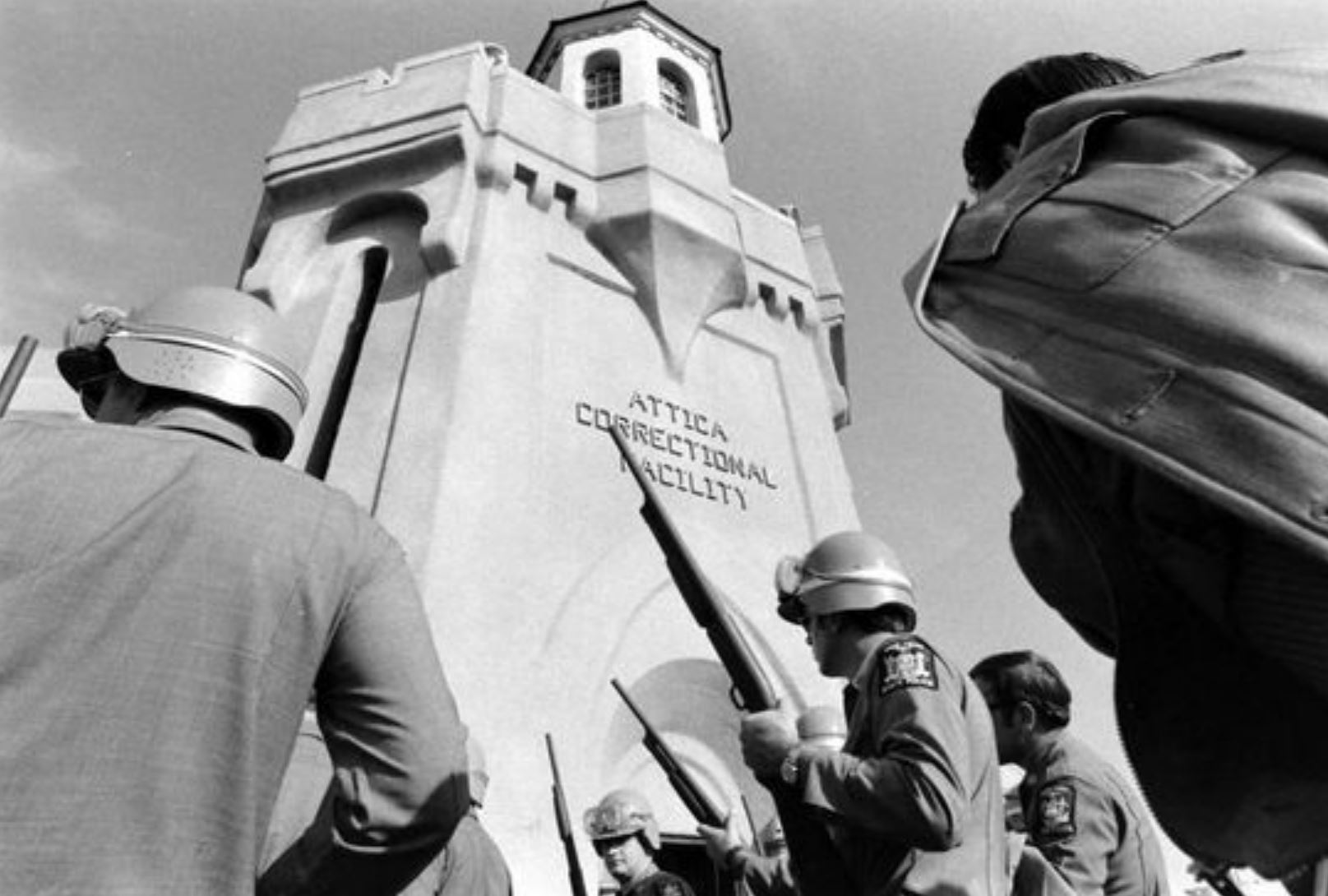
State troopers preparing to retake Attica during the prisoners’ uprising in 1971. Pinterest
Prisoners across the United States launched a strike on August 21, demanding improved living conditions, greater access to resources, and the end of what they call “modern day slavery.” Prisoners in at least seventeen states are expected to participate in the strike, coordinating sit-ins, hunger strikes, work stoppages, commissary boycotts, from today until September 9 — the forty-seventh anniversary of the deadly Attica prison uprising in New York.
Prisoners first called for the strike in April, after a bloody altercation broke out at the Lee Correctional Institution in South Carolina, leaving seven prisoners dead and seventeen others seriously injured. It was the deadliest prison riot in the United States in a quarter of a century. Six of the seven prisoners killed were African-American. The violence was allowed to continue for hours. One witness described bodies of dead prisoners, “literally stacked on top of each other.” No guards were hurt.
The Lee Correctional Institution riot became the rallying cry for a movement. In the weeks after that, prison advocacy network Jailhouse Lawyers Speak issued a list of ten demands, among them greater sentencing reform, more access to rehabilitation programs, the right to vote, and the end of “prison slave labor,” what they called “prison slave labor.”