Obama’s Failure to Adequately Respond to the 2008 Crisis Still Haunts American Politics
Meltdown, a new podcast from David Sirota and Alex Gibney, makes a compelling case that the failures of 2008 and 2009 — when Barack Obama had a chance to enact the visions of reform that swept him into office — are key to understanding American politics today.
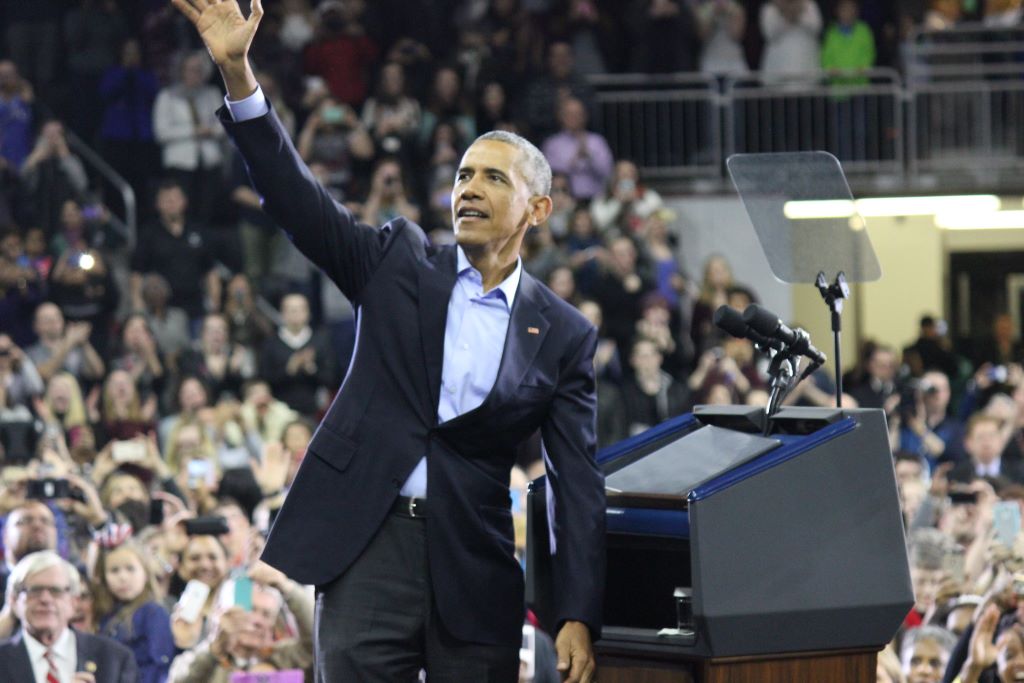
Former US president Barack Obama. (Matt A.J. / Flickr)
The question of causation in politics is almost always fraught. Complex events, after all, rarely if ever have a single cause, and in the case of a major national event like an economic collapse or an election, a wide range of factors and causes is invariably at play. In parsing these nuances, however, attempts to avoid reductionism can also become so narratively diffuse that they ignore the obvious and miss the forest for the trees. In some cases, the error is benign; in others, it’s simply convenient.
When it comes to the financial crisis of 2008–9, the story told by senior officials in the Barack Obama administration was quite literally that the corporate greed and malfeasance at the root of the collapse couldn’t be prosecuted because no one was actually responsible. “The buck still stops nowhere,” as attorney general Eric Holder put it in 2014: “Responsibility remains so diffuse, top executives so insulated, that any misconduct [can] be considered more a symptom of the institution’s culture than the result of the willful actions of any single individual.” This explanation certainly pleased the country’s leading bankers. But it has also proven mightily convenient for leading Democratic figures themselves, who had appropriately devised the perfect chin-stroking rationale for their own refusal to attack the crisis at its roots or put the interests of average people ahead of Goldman Sachs’s bottom line.
These themes run strongly throughout Meltdown, a new podcast series from investigative journalist David Sirota and documentary filmmaker Alex Gibney about the 2008–9 financial crisis and its aftermath that debuted this week. Narrated by Sirota, Meltdown’s raison d’être is more or less the inverse of the chin-stroking equivocation practiced by many of its subjects. In refreshing contrast, the series’ case is both compellingly coherent and unabashedly populist in tone and inspiration — taking up the election of Donald Trump and the ongoing crisis of American democracy as its animating questions and forcefully arguing for the centrality of its eponymous meltdown to political events today.