Big Tech Won’t Make Health Care Any Better
- Adam Baltner
Apple CEO Tim Cook claimed in 2019 that his company’s greatest achievement will be “about health.” But the pandemic has shown that Big Tech’s involvement in health care is all about data collection.
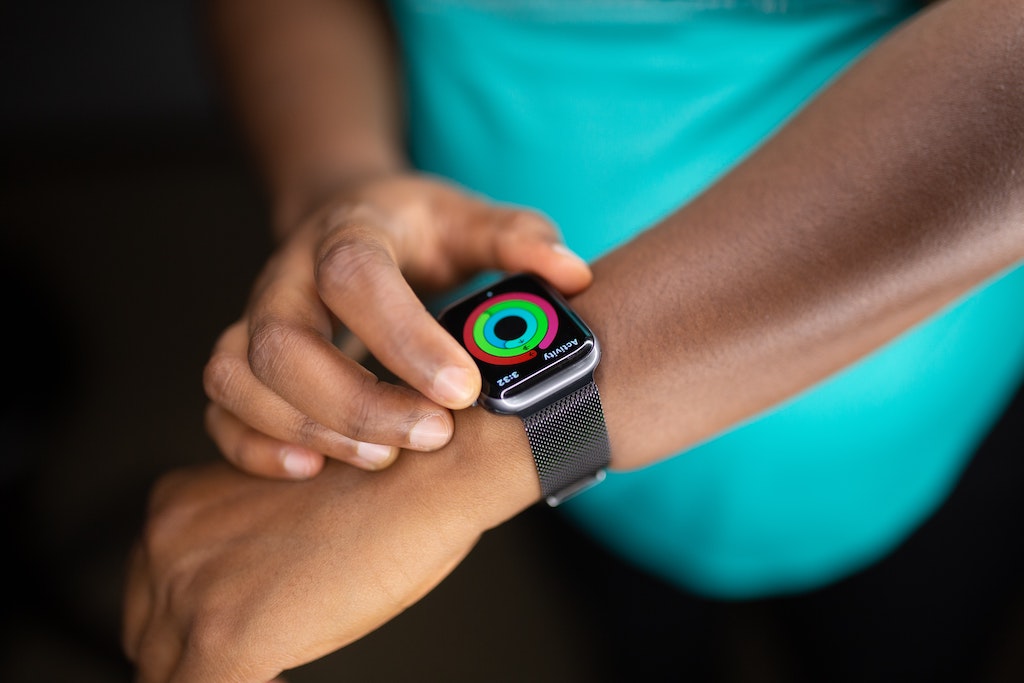
Convenient tech services and devices can also function as administrative and surveillance tools. (Solen Feyissa / Unsplash)
Big Tech sees the world as a readable map — and it’s long since catalogued every street, hill, and house and begun digitizing every book and photo. It’s even aggregated our behavior into analyzable datasets; and as the number of digital devices probing the self and the world increases, so too does the tech monopolies’ influence. The borders between digital representation and analogue reality, between map and territory, are becoming ever more elastic.
Maps don’t just enable navigation by describing the world. They also turn the world into something manageable and controllable. In this sense, tech companies’ constant search for undiscovered terrain should be no surprise. Devices like Apple Watch are just the first forays into a large-scale attempt to map life itself. Asked in 2019 about his company’s greatest contribution to humanity, Apple CEO Tim Cook answered that it would be “about health.” He could have been speaking for all of Silicon Valley.
Big Tech’s ambitions to expand into health care have gained new intensity during the pandemic. The emergency hasn’t only made GAFA (Google, Apple, Facebook, Amazon) a ubiquitous, seemingly indispensable presence in our lives. After several years of scandals and congressional hearings for the tech giants, it’s also given them a chance to rejuvenate their altruistic image by presenting themselves as champions of a new digitalized branch of health care.