How Socialist Cuba Became a Sports Power
In 1972, the Soviet Union beat the US in men’s Olympic basketball. The controversial victory has overshadowed the story of Cuba’s bronze medal at the very same games, and the remarkable socialist sports infrastructure that made the island nation’s win possible.
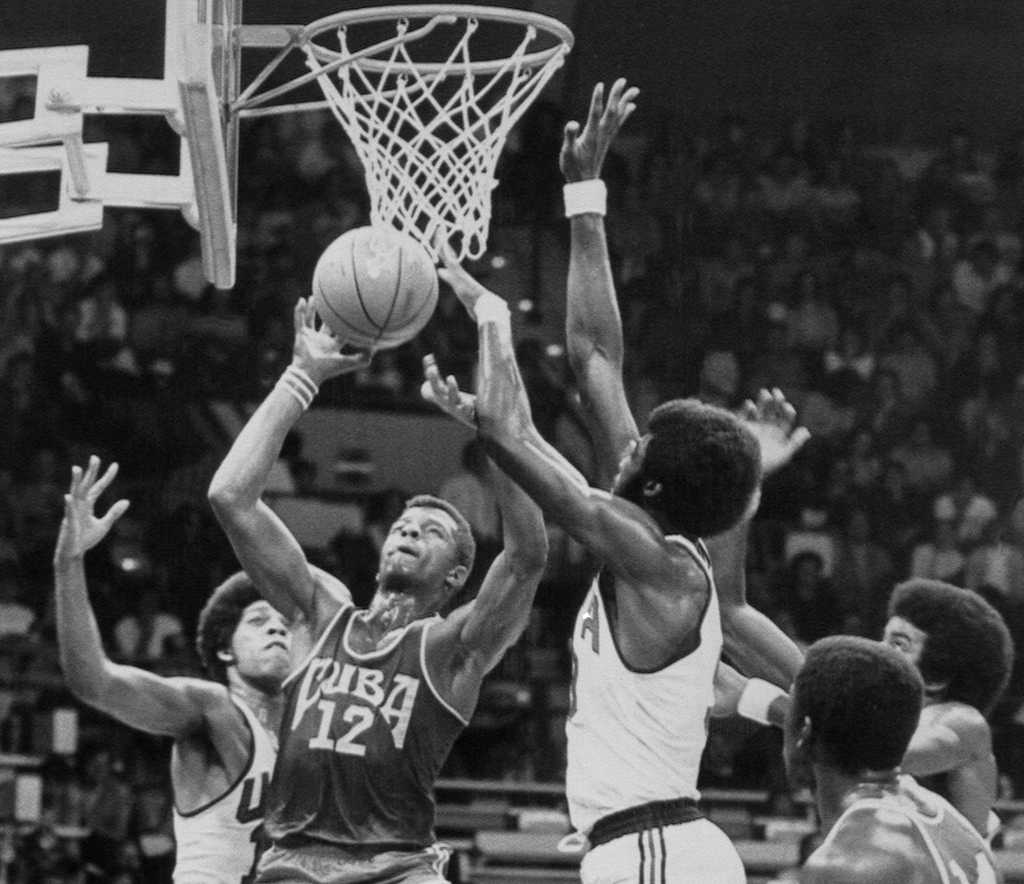
Cuba’s men’s basketball team competes against the United States to place in the 1972 Olympics. (Bettmann Archive / Getty Images)
In 1972, the Soviet Union beat the United States in men’s basketball, securing a gold medal and forcing the USA to settle for silver. The closing moments of the final remain one of the most controversial in sporting history. It was the first loss the United States experienced at the Olympics in the decades following the introduction of basketball in 1936 Berlin. The American team always expected to win gold.
The US team claims the win was irregular and still refuses to accept the silver medal. But there was one more team in the mix that year: the bronze medal Cubans.
To this day, it remains Cuba’s only Olympic basketball medal. To residents of the Global North, the country may seem like an unlikely outlier in the Olympic record books. But the bronze win was actually the first of many such successes for Cuba’s world-class sporting program that defied all odds for the better part of a century. The history of post-revolutionary Cuban sports has a lot to teach us about what a socialist model could look like.