In Norway, the Left Is Winning Back Power
Norway’s election this Monday brought defeat for the unpopular right-wing government. Now, Labor looks set to return to power — together with an emboldened radical left.
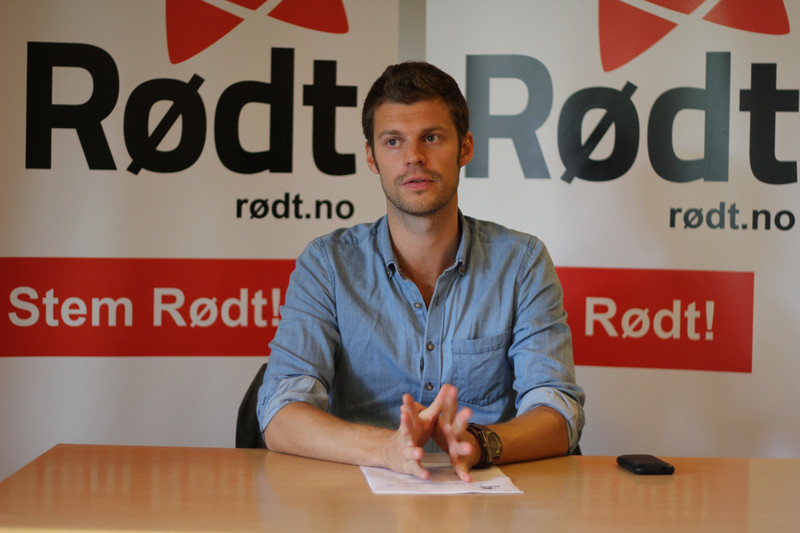
Bjørnar Moxnes, leader of Norway’s radical-left Red Party, which broke the electoral threshold of 4 percent in Monday’s parliamentary election.
In Norway’s parliamentary election on Monday, the country took a significant step to the left, securing one hundred mandates for the left side of the political spectrum, out of a total of 169. It’s unclear who will form the government, but it will likely be a majority coalition of the Labour Party (Ap), the Centre Party (Sp), and the Socialist Left Party (SV), or a minority coalition with just Ap and Sp. Alternatively, Labour can form a minority government alone, with support from the left in parliament, a model similar to the government of Denmark and Portugal.
The biggest takeaway is the breakthrough of the radical-left Red Party (R), which was the first new party in Norwegian history to break the electoral threshold of 4 percent. The Labour Party, in spite of bad polls in the spring, managed to secure its role as Norway’s largest party, even though they lost 1 percent since the previous election four years ago. The biggest increase went to the Centre Party, which ran a campaign against unpopular centralization reforms. The Socialist Left Party increased their support by 1.6 percent — less than the best polls predicted but a good result, especially considering the competition from the Red Party and the Green Party, as the three fight for many of the same votes.
Race for the Threshold
Norwegian politics has many parties, and therefore a lot depends on who breaks the electoral threshold of 4 percent and who does not. The parties hovering around the threshold are often referred to as small parties, and the rest as big parties.