Norway’s Socialist Left Is Ascendant
Norway’s Labor Party took a hit in this week’s elections. But the radical left surged — showing that socialist politics are still alive in the Nordic country.
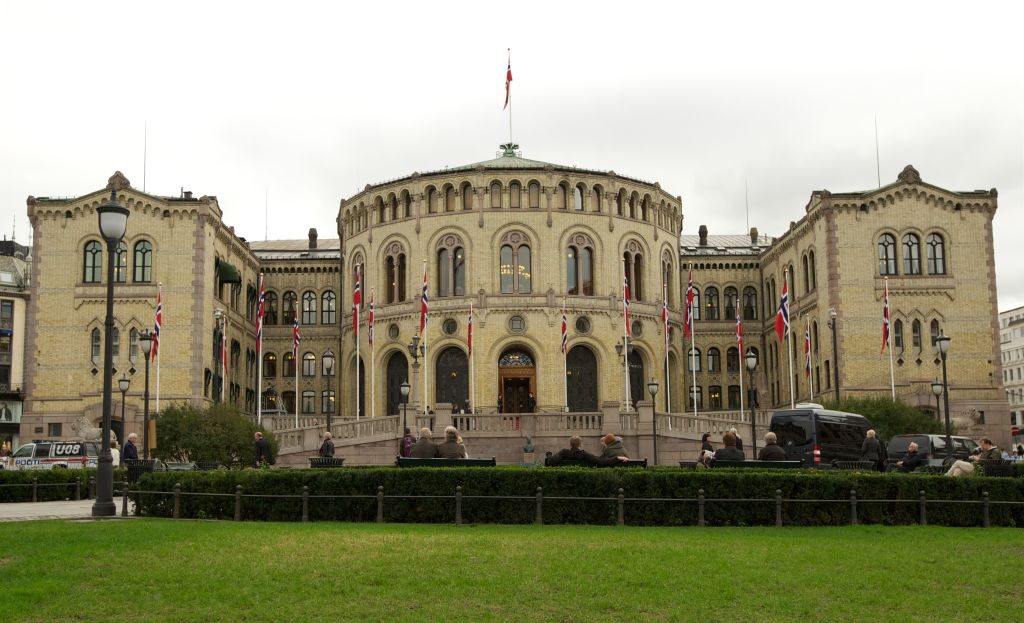
An exterior view of the Stortinget, the Norwegian parliament, on October 3, 2011 in Oslo, Norway.Ragnar Singsaas / Getty
On Monday, voters in Norway went to the polls to choose the mayors, city councilors, county representatives, and other local officials who will govern the country’s municipalities and counties for the next four years. Preelection polling suggested that the electorate planned to punish the three largest parties — the center-left Labor Party, the center-right Conservative Party, and the far-right Progress Party — and they did. All three lost support, as voters flocked to parties decrying everything from administrative centralization and excessive road tolls to environmental degradation and for-profit welfare providers.
While commentators continue to sort out what it all means, there is already talk of “the great protest election,” “the polarization election,” and “the election that changed everything.” So, what changed?
From the Left to the Center
The most significant development on Monday was the strong showing by the Green Party, an environmentalist outfit whose support is concentrated in Norway’s cities. Along with the Labor and Socialist Left Parties, the Greens have governed Oslo since 2015, leaving their imprint with ambitious anti-carbon goals (for example, cutting emissions by 50 percent from 1990 totals), new automobile-free areas, and a Climate Budget to guide the implementation of eco-friendly policies. On Monday, their national support grew by 2.6 points to 6.8 percent, and in Oslo, they nearly doubled their share to 15.3 percent. At a celebration in the capital, Lan Marie Nguyen Berg, a city council member and the de facto face of the party, declared that a “green wave” is coming in the 2021 parliamentary election.