Australian Universities Are Finance Investors With a Side Hustle in Education
Thanks to neoliberalism, Australia’s universities have become profit-seeking businesses. But they don’t just sell education: University executives are increasingly transforming their institutions into financial speculators and real estate investors.
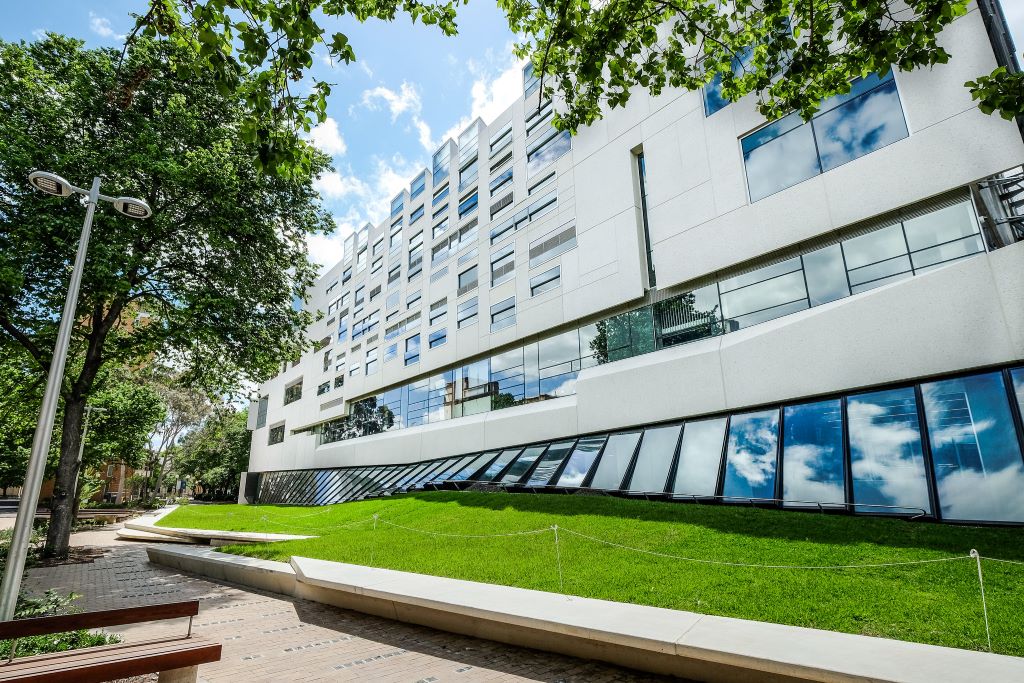
The Glyn Davis Building at the University of Melbourne, named after the school’s former vice-chancellor. (a.canvas.of.light / Flickr)
In November 2019 the former vice-chancellor of the University of Melbourne Glyn Davis made a statement to the Age defending his record from 2005 to 2018. In an attempt to justify the massive expansion of casual work, record levels of professional staff sackings, spiraling workloads and wage theft, Davis compared Australian universities with the mining industry. The resources sector was thriving on a multibillion-dollar boom driven by exports to Asia; thanks to international students, university revenue was also booming.
As Davis noted, booms inevitably go bust. As a result, he cautioned prudent university executives to “invest in things that will matter into the future.” Thanks to the pandemic, Australian universities are now in a deep crisis. The boom has turned bust, and the sector is facing a crisis.
Soft Human Expenses, Hard Capital Works
When Davis said that universities should invest in things that matter, he meant more buildings. During the neoliberal era, the massification and marketization of Australian universities accelerated dramatically, funded primarily by cash fees paid by international students. This process was set off by reforms introduced by Labor prime minister Bob Hawke in the late 1980s deregulating international students’ fees. Driven by market competition, international students now pay four times as much as their Australian classmates.