New York’s “Cancel Rent” Movement Isn’t Over
The call to cancel rent won widespread support and helped advance a vision of housing justice we can build off of for years to come.
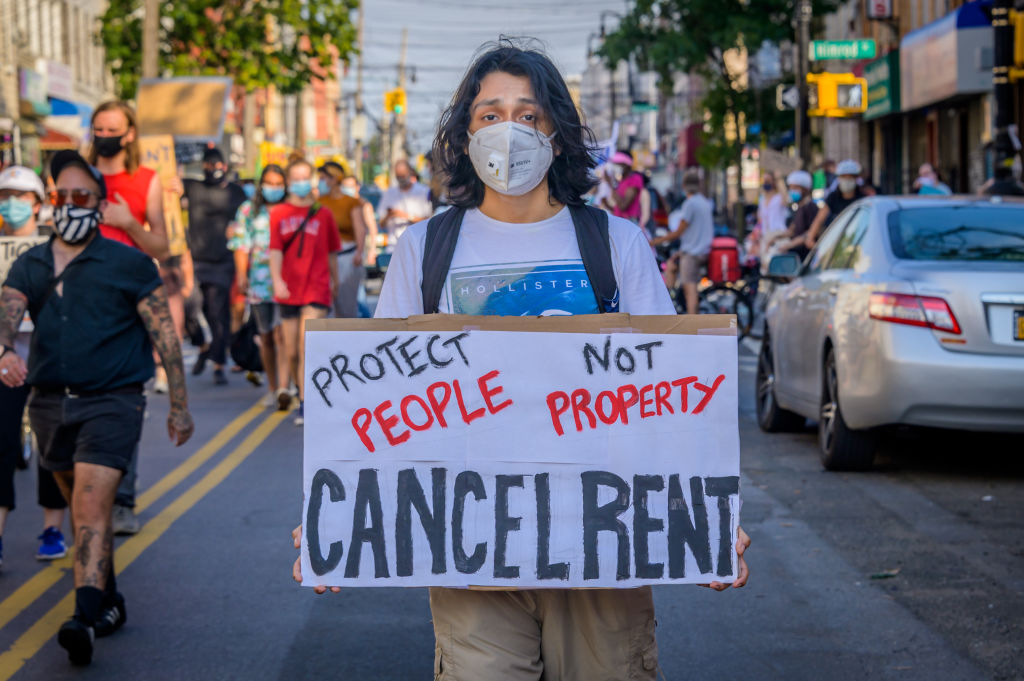
New Yorkers take to the streets to demand rent be cancelled in July 2020. (Erik McGregor / LightRocket via Getty Images)
Eighteen months ago, COVID-19 forced millions of people to reckon with a long-standing crisis of housing insecurity in the United States. Before the pandemic, millions of people could not afford their housing costs: 75 percent of low-income families were paying more than half their income on rent, and just one in four people who needed public rent relief received it. By the fall of 2020, as many as 43 percent of the nation’s renters were at risk of eviction.
It was in this context that the demand to “cancel rent” rippled across the country. And in New York, the housing movement was well prepared. Less than a year earlier, in June 2019, we had defeated the most powerful lobby in New York State, winning sweeping tenant protections — the strongest in the country — and expanding rent regulations for the first time in decades. In 2020, facing a deadly pandemic and an attendant economic crisis, the campaign to cancel rent animated hundreds of protests, rallies, and the largest coordinated rent strike in decades.
But despite this historic mobilization and the horrifying proportions of the crisis, New York State did not cancel rent. Instead, it passed the Emergency Rental Assistance Program (ERAP) — a temporary program to distribute $2.7 billion in federal money to landlords for COVID-19 back rent. So far, the program has distributed a paltry number of checks, and forces tenants and landlords to spend about two hours to apply — if they’re not blocked by myriad technical glitches.