Iceland’s 35-Hour Working Week Worked. It Could Here, Too.
Between 2015 and 2019, Iceland embarked on two massive trials to test the idea of a shorter workweek. The result was an astounding success for its workers — and a model that deserves to be replicated elsewhere.
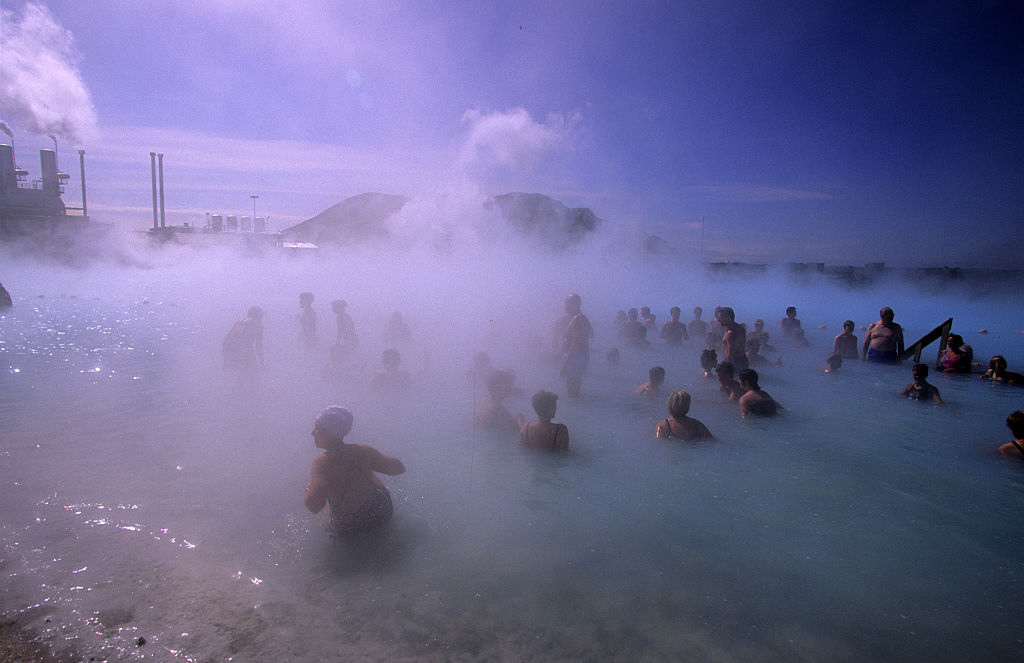
People relax in Iceland’s Blue Lagoon. (José Nicolas / Corbis via Getty Images)
Thanks in large part to organizing by trade unions, Iceland initiated two massive trials to test the idea of a shorter workweek. The premise of the trials, which began in 2015 and 2017, sought to measure what would happen if workers were given shortened hours with no reductions in wages. Their result, it turned out, was an overwhelming success in every sense of the word, and the model has since been made into a reality for nearly 90 percent of Icelandic workers.
A June report jointly published by the UK-based think tank Autonomy and the Icelandic organization Alda, titled Going Public: Iceland’s Journey to a Shorter Working Week, studied the mechanics, findings, and outcomes. In this interview, report coauthor Guðmundur D. Haraldsson speaks to Jacobin about the trials, what they revealed, and the potential the model could be replicated elsewhere.
Luke Savage
Let’s start with some background. What exactly were these trials and how did the idea to test run a shorter working week come about?
Guðmundur D. Haraldsson