The Fight for Free Time
The demand for fewer working hours is about liberation — both individual and collective.
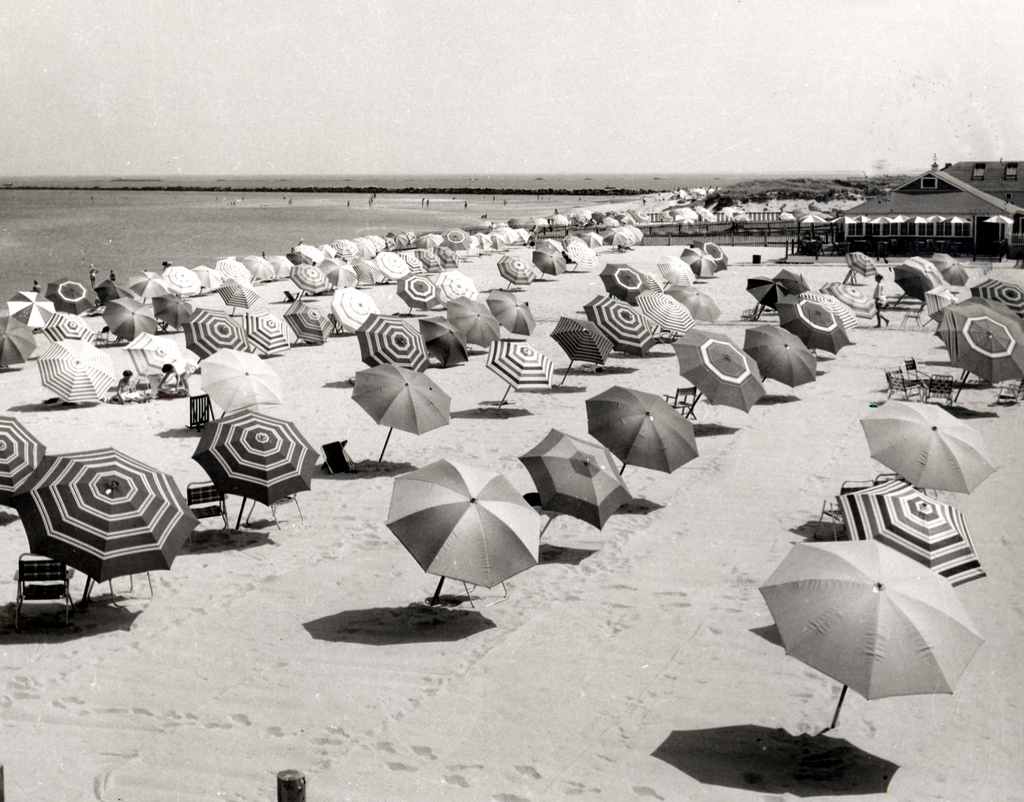
Cliffside Beach with umbrellas, circa 1950. Louis Davidson / Nantucket Historical Association
Last month, Germany’s largest union, IG Metall, launched a campaign with deep historical roots. The union — which represents 2.3 million manufacturing workers — is using annual wage negotiations to call for a reduction in the standard workweek, from thirty-five hours to twenty-six, arguing it would allow workers to, among other things, care for children and elderly relatives. With the initiative, IG Metall has returned to one of the union movement’s most hallowed — and traditionally successful — issues: free time for workers.
Free time, as IG Metall argues, is essential for basic dignity; to care for ourselves and our communities, we need time away from generating profit for employers. Just as importantly, we need it to realize our human potential. Our ability to think independently, experience romance, nurture friendships, and pursue our own curiosities and passions requires time that is ours, time that belongs neither to the boss nor the market. At its core, the campaign for fewer working hours is about liberation, both individually and collectively.
Surprisingly, it has long ceased to be an issue that graces political platforms in the US, even on the Left. It wasn’t always so. “The length of the workdays,” labor historians have argued, “has historically been the central issue raised by the American labor movement during its most dynamic periods of organization.”