Sweden’s Collective Bargaining for Rents Must Be Defended
In Sweden, rents aren’t set at landlords’ whims but through collective bargaining with the tenants’ union. The system is a reminder of Swedish social democracy’s once-great reformist measures — but also how vulnerable they are in an age of neoliberal counterreforms.
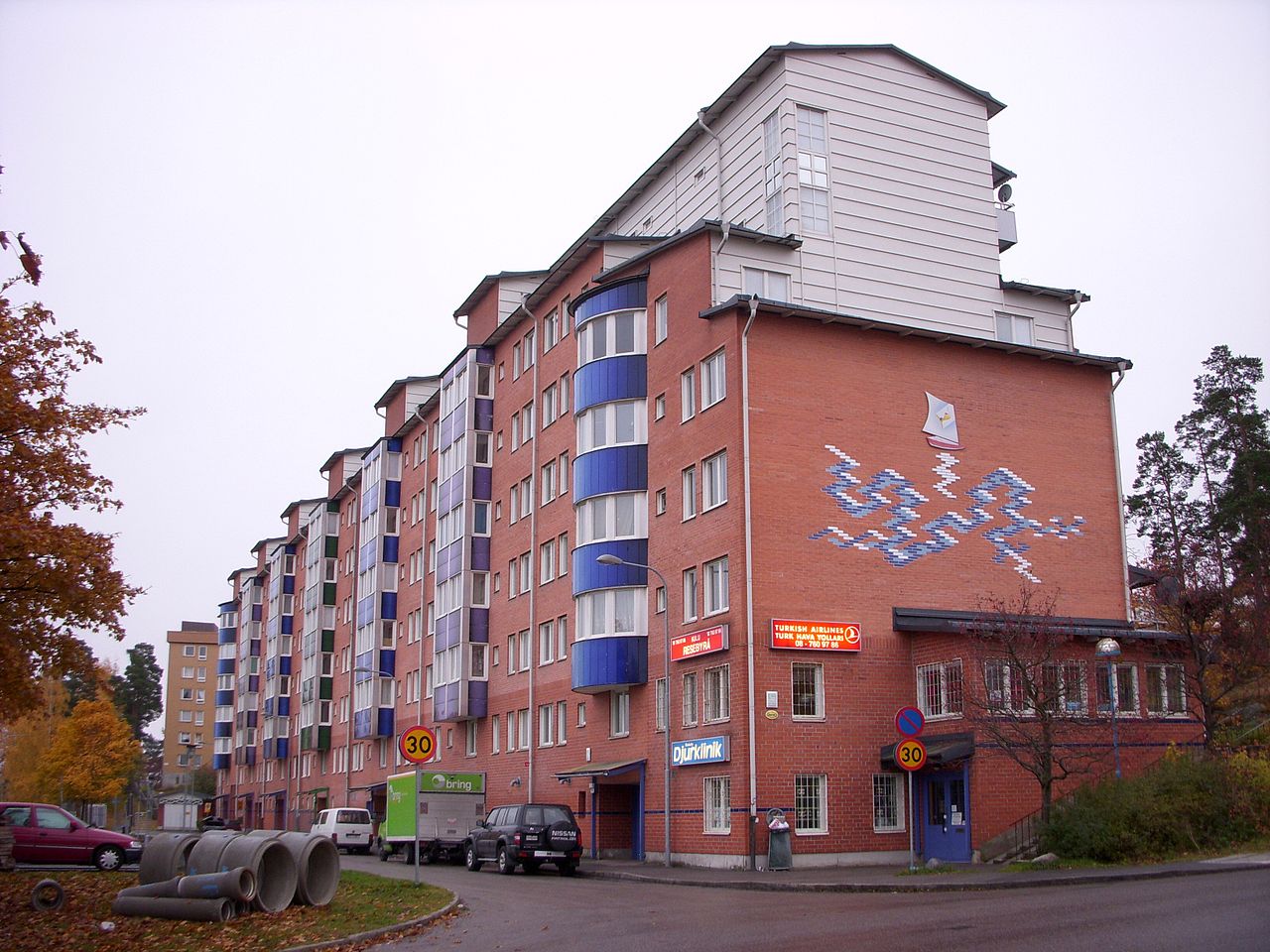
Refurbished Million Program homes in Rinkeby in Stockholm, Sweden. (Holger Ellgaard / Wikimedia Commons)
In late June, Sweden’s Social Democratic Party (SAP) prime minister lost a no-confidence vote in parliament, with the decisive backing of the Left Party. Throughout history, the Social Democrats could traditionally count on this small left-wing party’s support whenever a right-wing government risked coming to power. This time, however, a red line had been drawn, with the Left Party now under the leadership of Nooshi Dadgostar, an MP concerned with housing issues who has a background as a housing activist. The Swedish model of centrally bargained rents was under threat, and the Left Party had vowed to protect the country’s 3 million tenants from a new model that would strip them of bargaining power and thus produce skyrocketing prices.
In bringing down the government, the Left Party moved to protect a model that had been built up over a century’s struggle — and, in the past, institutionalized and guarded by the Social Democrats. Yet in recent decades, the issue of housing reform has been much on the political agenda, with Sweden facing an ever-worsening housing crisis. The crisis has its roots in a series of far-reaching changes to how housing is financed and provisioned, pushed through in the early 1990s under what was at the time an uncommon right-wing government. While these earlier moves saw an aggressive tearing down of large parts of the system built up over generations, the latest reforms threatened to be the final nail in the coffin.
People who rent their home have fared poorly over recent decades, as private ownership and mortgage holding has been favored by a series of “reforms.” The almost 30 percent of Swedes who live in a rented apartment (half of them in public housing) have seen rents go up and conditions worsen. But because Sweden has a peculiar way of setting rents, they have been somewhat protected. Independent of ownership, rents are not unilaterally set by the landlord, but rather decided though negotiations between the landlord and the once mighty and still powerful tenants’ union.