Why Brazilian Workers Love Lula
Lula rose from humble origins to become a leftist icon, exuding working-class authenticity and successfully bringing working people into the country’s political life. And his story isn’t over: he could soon return to power.
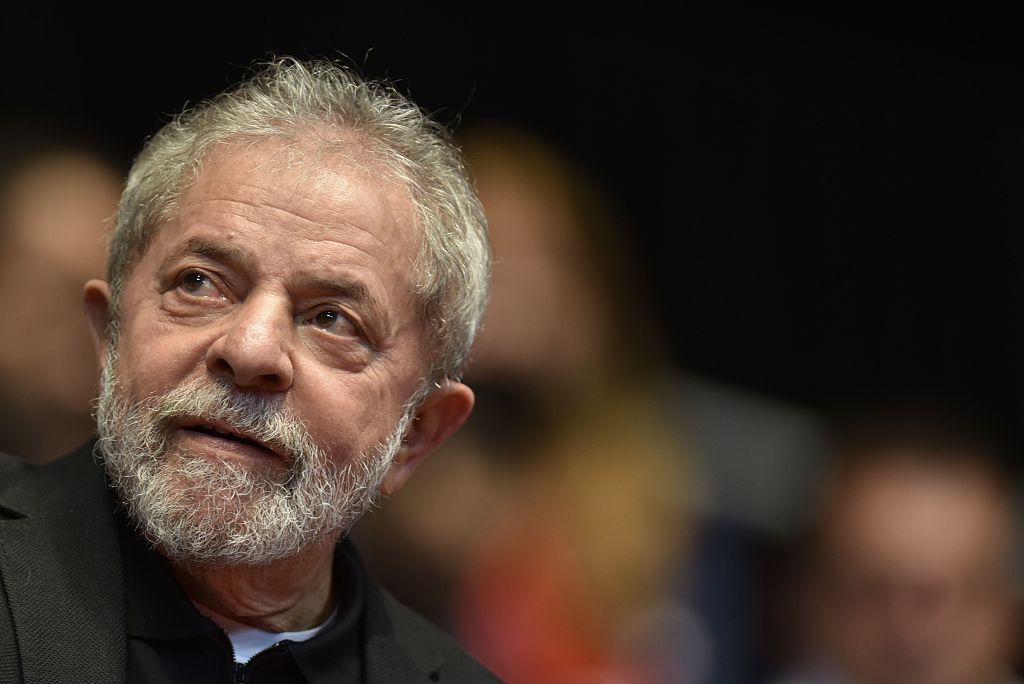
Lula Da Silva participates in the 12th Congress of the Brazilian Workers Union (CUT) in Belo Horizonte, Brazil, 2015. (Douglas Magno / AFP via Getty Images)
The past five years have been unbelievably tumultuous for Brazil’s leading leftist politician, former president Luiz Inácio Lula da Silva. In 2016, Lula’s Workers’ Party (PT) was cast from office after thirteen years in power when his chosen successor, Dilma Rousseff, was impeached on spurious grounds. Two years later, Lula himself was arrested on corruption charges and far-right leader Jair Bolsonaro was elected president. Despite international calls for his release from the likes of Bernie Sanders and Diego Maradona, Lula had never been so low.
Then, in 2019, the Supreme Court ruled that the court that sentenced Lula had no jurisdiction over his case. He was released but barred from seeking office. And finally, earlier this year, redemption: Brazilian authorities deemed Lula eligible to run for president. Polls now show the former president with a strong chance of returning to power as Bolsonaro’s popularity plummets.
John French’s new biography of Lula is the best analytical work yet on the former president, offering profound insights into Lula’s rise and his enduring appeal through shifting political tides. French, a professor of history at Duke University, is one of the most prominent Brazilianists working today, and his book explores Lula the person without falling into the personalist trap that many critics associate with the PT.