Were Haiti’s Capitalists Behind the Assassination of President Moïse?
Haitian president Jovenel Moïse was assassinated this week by alleged mercenaries. In an interview with Jacobin, the English language editor of Haiti Liberté says he suspects that some of Haiti’s richest families hired the attackers to preempt a potential revolution — and possibly even trigger US military intervention.
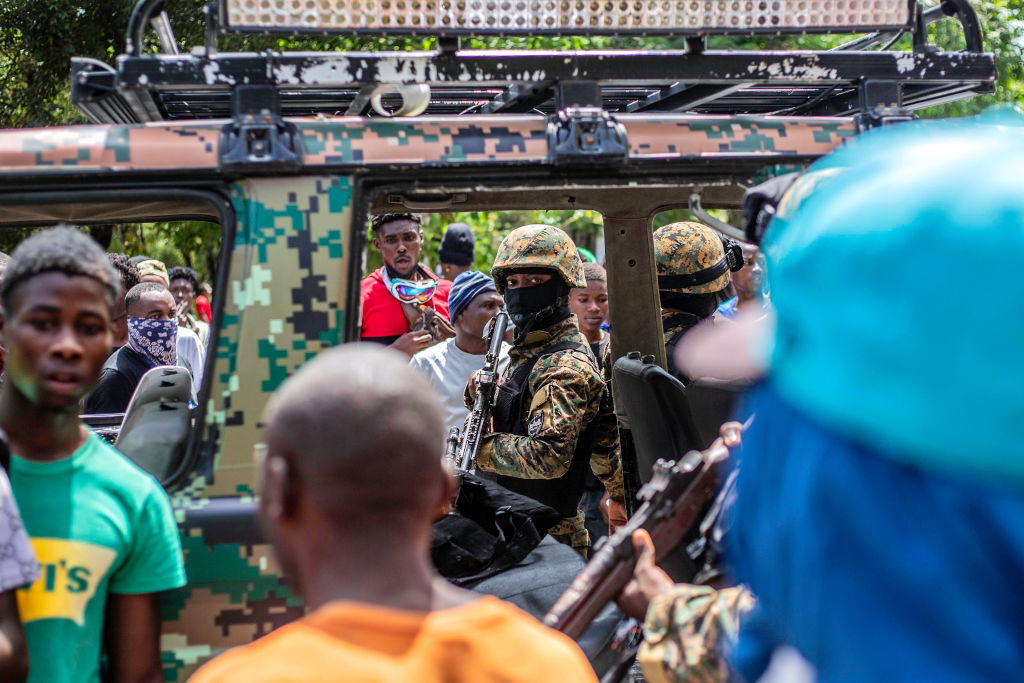
A soldier patrols the area near the police station of Pétion-Ville, where people protest after the assassination of Haitian president Jovenel Moïse on July 8, 2021, in Port-au-Prince, Haiti. (Richard Pierrin / Getty Images)
During the early morning of July 7, hours before first light, nine SUVs arrived at the home of Haitian president Jovenel Moïse outside of Port-au-Prince. Moïse had been clinging to the presidency since February, sparking weekly demonstrations by thousands of Haitians who accused him of corruption — especially in relation to Petrocaribe, a program through which Venezuela provided Haiti with billions of dollars’ worth of oil and funding meant to support development.
What months of popular protests had not accomplished, a small band of suspected mercenaries carried out in minutes. Claiming to be agents with the US Drug Enforcement Agency (the DEA, which maintains a presence in Haiti to assist with counter-narcotics operations), the group gained entry to the home and killed the president.
Moïse’s assassination comes amid increasingly revolutionary fervor in Haiti. The popular demonstrations against corruption, which were supported by bourgeois opponents of the former president, have more recently given way to openly radical forces, such as those around Jimmy “Barbecue” Cherizier. A former cop turned vigilante leader, Cherizier has sought to unite Haiti’s many armed community defense groups, and even criminal gangs, under the banner of the “Revolutionary Forces of the G-9 Family and Allies” in order to topple the state altogether. His base is in Haiti’s shantytowns, where millions of former peasants now comprise a “lumpenproletariat” of unemployed workers.