The Many Faces of Regime Change in Cuba
Cubans confront a host of problems amid a national health emergency — and the Biden administrative is only adding to punitive sanctions with the intent to make everything worse.
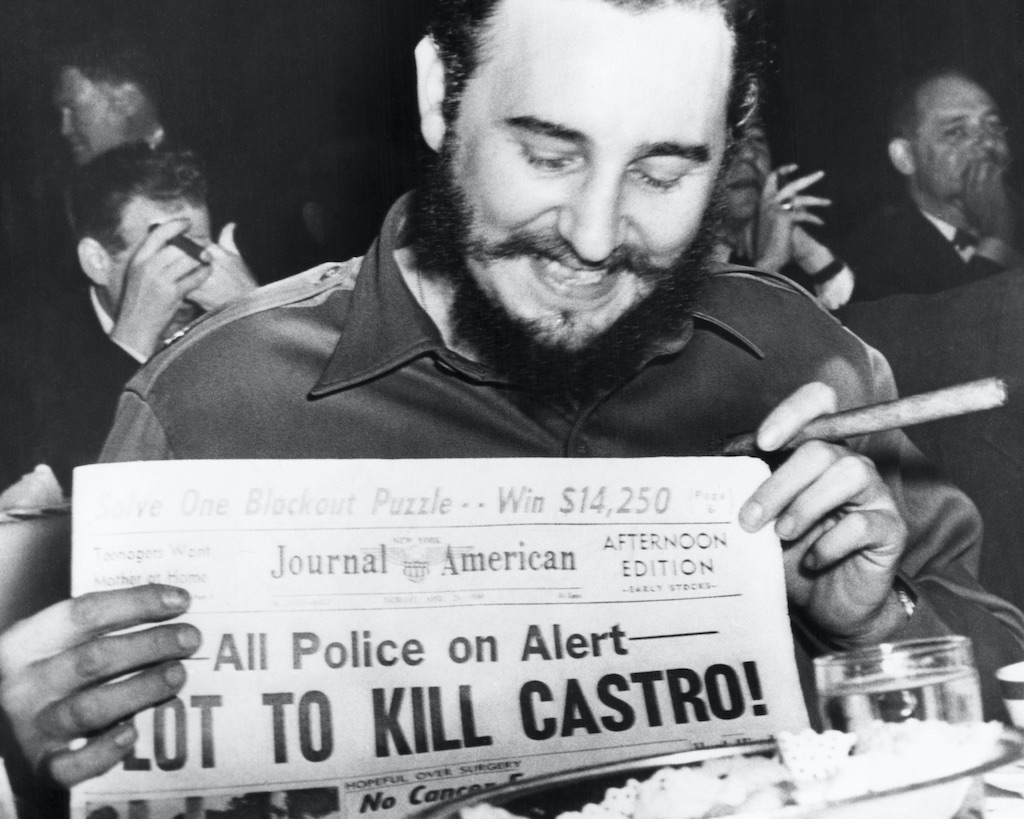
Fidel Castro holds up a newspaper headlining a plot to kill him in 1959. (Bettmann via Getty)
After months of casual indifference to conditions in Cuba, the Biden administration reacted with purposeful swiftness to support street protests on the island. “We stand with the Cuban people,” President Biden pronounced. A talking point was born.
“The Biden-Harris administration stands by the Cuban people,” secretary of state Antony Blinken followed. Senate Foreign Relations Committee chair Robert Menéndez also joined to emphasize “the need for the United States to continue to stand with the Cuban people.”
For more than a hundred and twenty years, the United States has “stood with the Cuban people” — or, perhaps more correctly, has stood over the Cuban people. Cuba seems always to be at the receiving end of American history. To stand with the Cuban people has meant armed intervention, military occupation, regime change, and political meddling — all normal events in US-Cuba relations in the sixty years before the triumph of the Cuban revolution. In the sixty years after the revolution, standing with the Cuban people has meant diplomatic isolation, armed invasion, covert operations, and economic sanctions.