Algerians Toppled a President. Now They Are Fighting for Real Democracy.
Two years since millions-strong protests toppled Algeria’s longtime president, June’s regime-organized elections met with a massive popular boycott. For Algerians to really control their lives, the whole regime must go.
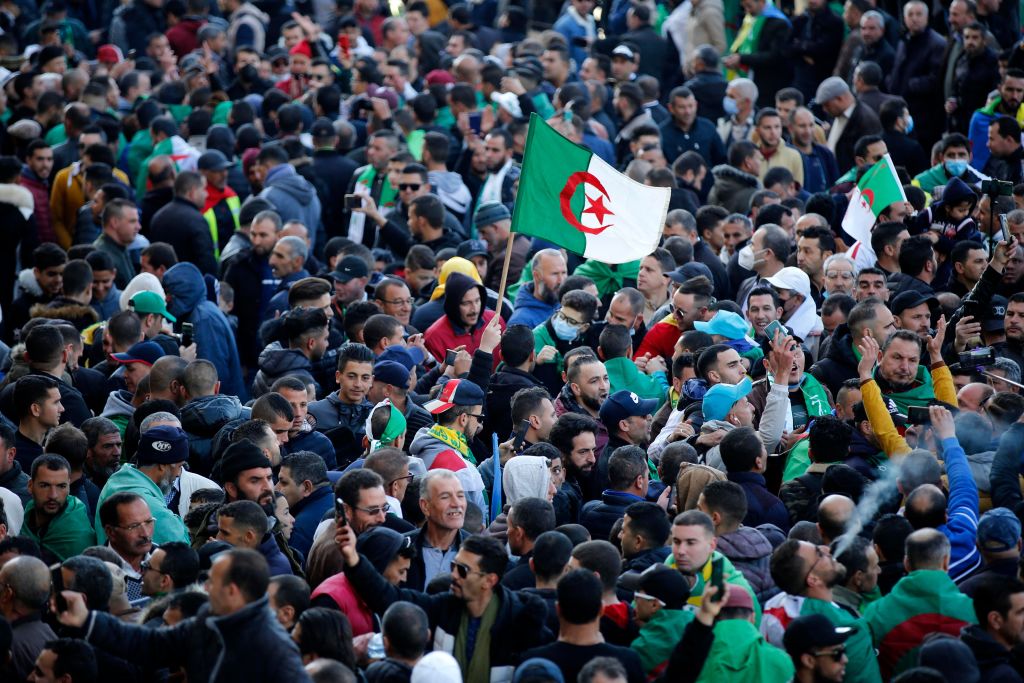
Algerians rally in the northern town of Kherrata on February 16, 2021, marking the return of the Hirak protests, two years after the mass movement swept former president Abdelaziz Bouteflika from power. (AFP via Getty Images)
Following over a year of demobilization owing to Algeria’s COVID-19 restrictions, this February the Hirak (“movement”) returned to the streets to mark two years since the mass uprising which ended president Abdelaziz Bouteflika’s twenty-year rule. Alongside ongoing weekly demonstrations and strikes, last month the Hirak organized a mass boycott of national elections held by the regime, whose legitimacy it refuses to acknowledge. In the end, turnout was under 23 percent.
The regime has been wrong-footed by both a growing economic crisis — largely caused by the fall in income from oil and gas exports — and an inability to control popular discontent. It is trapped between trying to appeal to the population through gestures of goodwill and continuing to repress activists, journalists, and demonstrators. Yet rather than help the regime to regain control, each such decision fuels the flames. The dismal turnout in June’s vote demonstrated the depth of its crisis, as less than one in four eligible voters cast their ballots.
Illustrating the rising intensity of street contestation, last week mass demonstrations erupted in the two southern wilayas (provinces) of Ouargla and Touggourt. Led by the unemployed, protesters blocked key roads and clashed with police forces following the announcement of new hires in the oil industry, which the demonstrators claim are distributed based on cronyism. More fundamentally, people in the south of Algeria are revolting against a system that continually underfunds their regions even though they sit on top of the oil and gas reserves on which the entire national economy still depends.