Arab Workers and the Struggle for Democracy
Since 2011, Arab labor organizations and left parties have been central to movements for democracy and social justice in the Middle East. Frequently overlooked in Western media coverage, from Egypt and Tunisia to Algeria and Sudan, they’ve carried on this fight against tremendous odds.
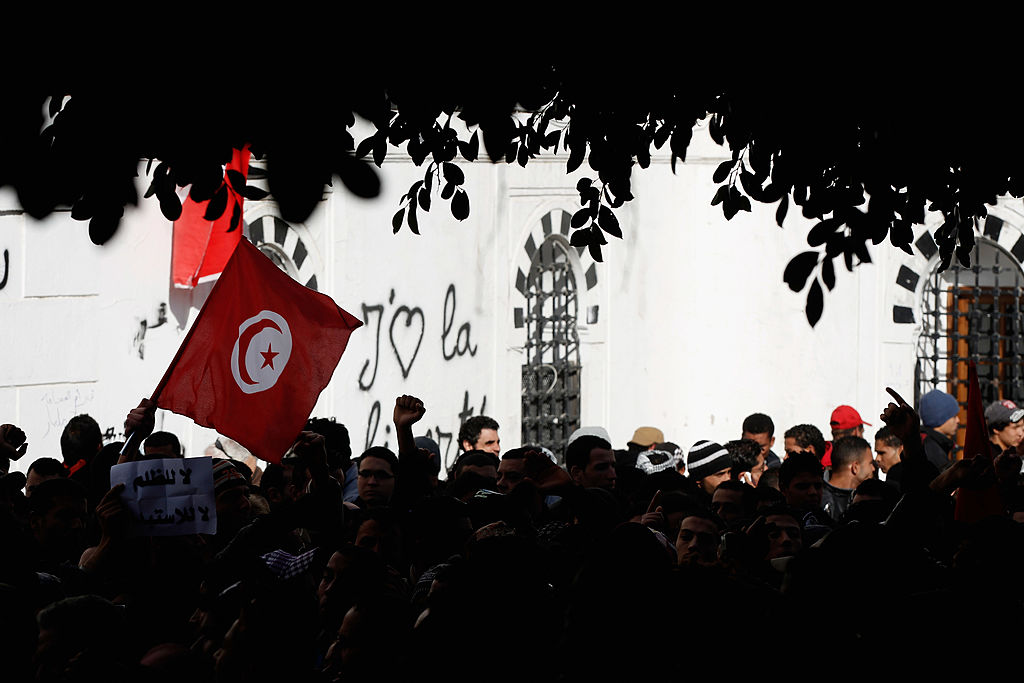
Protesters chant songs and demands outside the Tunisian prime minister’s office on January 24, 2011 in Tunis, Tunisia. Protesters from the countryside and the hamlet of Sidi Bouzid, the town where the “Jasmine Revolution” started, walked through the night to descend on the prime minsiter’s office. (Christopher Furlong / Getty Images)
On January 14, 2020, thousands marched down the main boulevard of Tunisia’s capital city of Tunis, festively celebrating the ninth anniversary of the revolt that ousted corrupt autocrat Zine El Abidine Ben Ali, the country’s former president. Surrounded by a phalanx of security forces, the crowd didn’t raise political slogans. The order of the day was expressing pride in the accomplishments of the 2010–11 “Jasmine Revolution” and hopes for the future.
A short distance away, several hundred gathered in the square in front of the headquarters of the Tunisian General Labour Union, the national trade union federation (known by its French acronym, UGTT). They chanted, “Work! Freedom! Dignity!”: a revolutionary slogan suggesting that these goals have yet to be achieved.
UGTT secretary-general Noureddine Taboubi addressed the crowd, decrying the lack of economic progress since Ben Ali’s departure: “The revolution will go on until the real republic has been established.” Mongi Merzgui, secretary-general of the national union of sanitation workers, continued the same theme: “I’m really disappointed . . . we have freedom of expression, but that can’t create jobs or feed us.”