Mike Gravel Was on the Right Side of History
While Mike Gravel never earned the respect of the political establishment, he passed from this Earth with his conscience untormented by the ghosts of screaming civilians whose lives those in Washington regularly snuff out with their afternoon coffee.
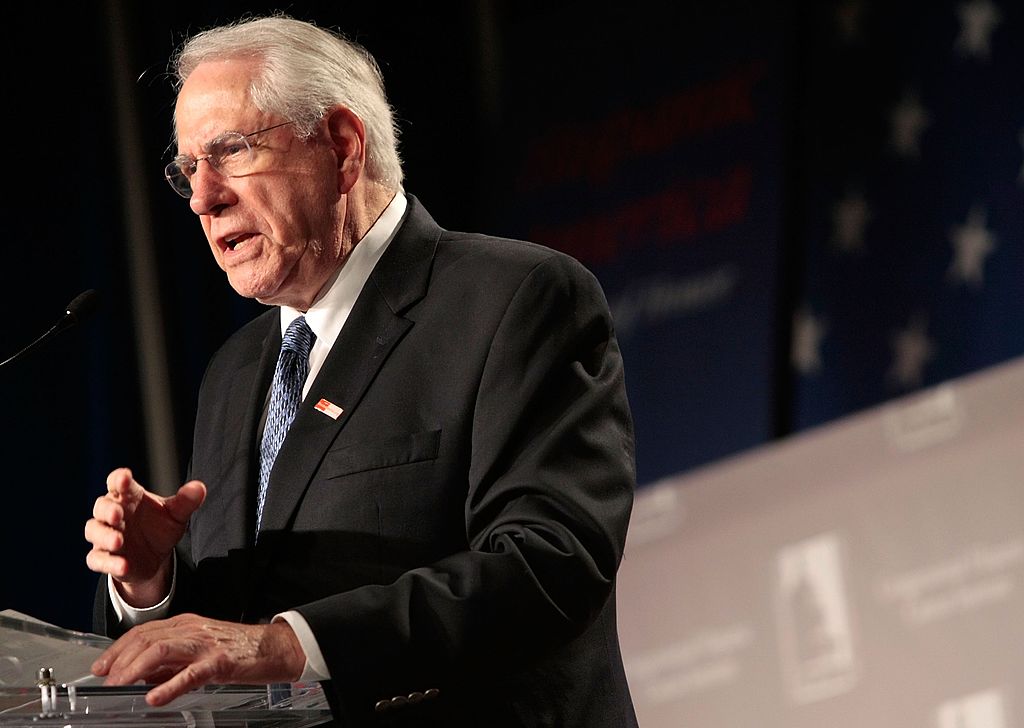
Sen. Mike Gravel speaks during a presidential candidates forum in 2007 in Washington, DC. (Alex Wong / Getty Images)
Former Alaska senator Mike Gravel, who died yesterday at age ninety-one, spent much of his political career and public platform trampling institutional niceties, customs, and tradition for the sake of the principles he held dear. Naturally, it earned him hostility, mockery, and dismissal, which persisted even as core parts of his politics have been welcomed into the mainstream.
One need only look at the way two of the country’s most influential newspapers responded to the news of the former senator’s death. For the New York Times, he was “an unabashed attention-getter” prone to “grandstanding,” whose most notable achievement was the Trans-Alaska oil pipeline finished in 1977. For the Washington Post, he was a “gadfly” who achieved “brief renown” when he famously read thousands of pages of the top secret Pentagon Papers into the congressional record. Both stressed the failures of his 2008 and 2020 campaigns, with the Times in particular seeming to delight in telling readers about the infinitesimal votes he was able to muster that first run.
It’s familiar terrain for Gravel. Back in 2007, he was similarly dismissed, despite searing himself into political memory with his brutal assessment of his fellow candidates in that year’s first Democratic debate. Talking into a finely tailored wall of laughter and smiling condescension, Gravel delivered a rare moment of political truth-telling in televised politics: