South Korea’s “Economic Miracle” Was Built on Murderous Repression
Today marks 60 years since Park Chung-hee’s coup installed military rule in South Korea. His regime is credited with bringing the country rapid economic growth — but its industrial success was built on the massacre of labor activists and the systematic suppression of workers’ basic rights.
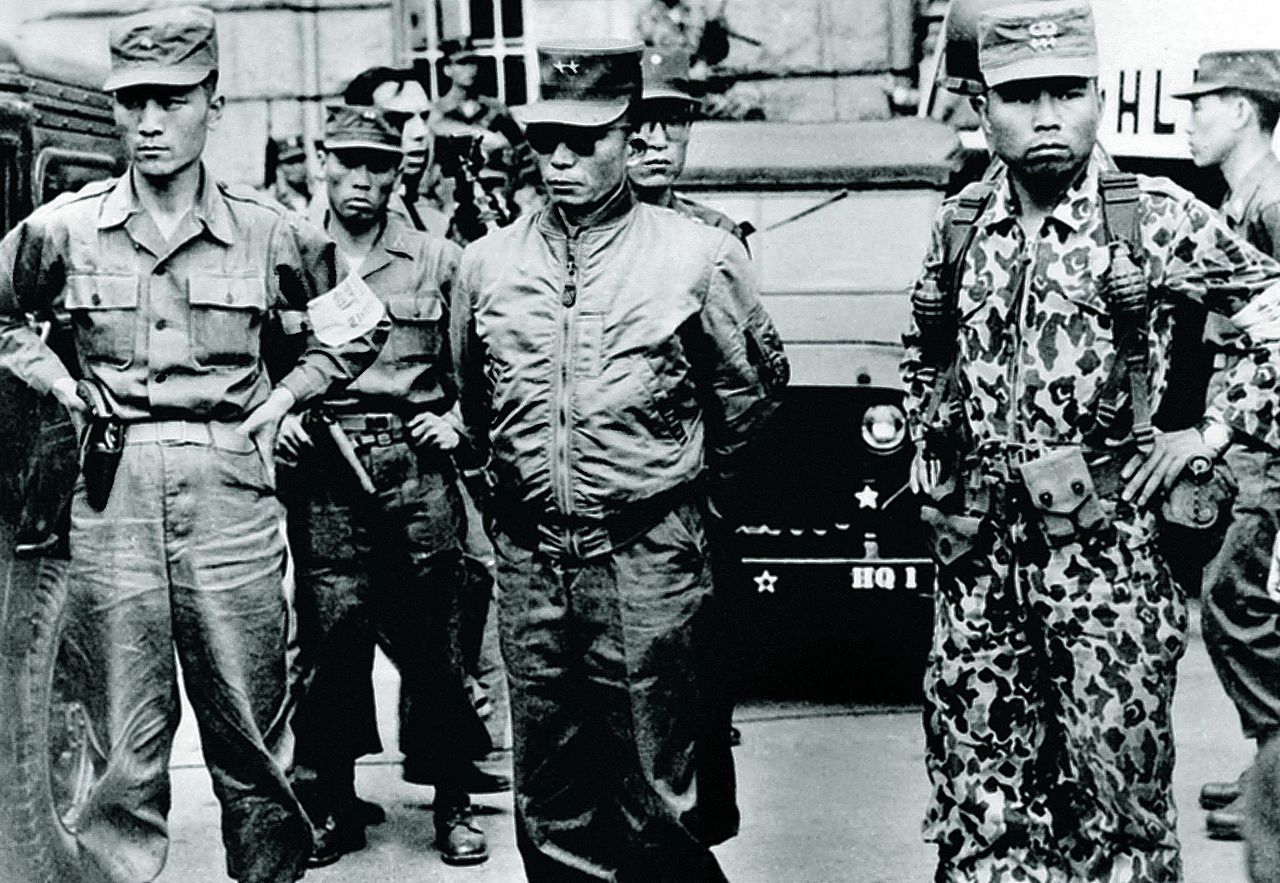
General Park Chung-hee and soldiers on May 16, 1961. (Wikimedia Commons)
May 16, 2021, marks sixty years since the military coup by South Korean general Park Chung-hee, installing a regime credited with two decades of rapid economic growth and the birth of South Korea’s all-powerful chaebol industrial conglomerates. However, this so-called “Miracle on the Han River” was only possible due to the rampant exploitation of workers. In the 1960s and 1970s, Park Chung-hee’s “growth-first” economic policies relied on unbelievably long working hours, low wages, murderous workplace safety standards, the strict repression of workers’ rights, and rampant pollution and ecological devastation.
To understand the coup, we first need to look at the period that began with liberation from Japanese colonial forces. As a recent history of Korean capitalism by leftist scholar Park Seung-ho demonstrates, the events of May 16, 1961, were a key moment in an ongoing war waged by the South Korean ruling elite and American imperialism to crush the surge in socialist, worker-led movements in post-liberation Korea. For it was the annihilation of working-class power and leftist organizing by the post-1945 United States Army Military Government in Korea (USAMGIK) and the vehemently anti-communist, anti-worker Syngman Rhee administration that created the conditions that made the coup possible.
The Left’s Rise After 1945
From 1910 to 1945, Korea had been a colony of the Japanese empire. The colonial regime brutally exploited Korean labor, extracting raw materials and crops to maintain low wages for industrial workers on the Japanese mainland. The limited industrial development that accompanied the colonial occupation gave birth to a labor movement closely allied with the fight against Japanese imperialism. The situation changed dramatically with the end of World War II and Korea’s liberation from Japanese colonialism by Allied forces. Now, Korean resentment over three decades of colonial rule fueled the growth of left-wing labor unions and peasant organizations, which demanded a more equitable distribution of wealth, the end of repressive police violence, and democratic land reform.