The Long History of Mexican-American Radicalism
Mexican-American workers have a long tradition of radical organizing, stretching back to the days of the Industrial Workers of the World and the mid-century Communist Party. And in 1968, with a longtime Communist Chicano family at the center, Mexican-American students in LA launched the largest student walkout in US history.
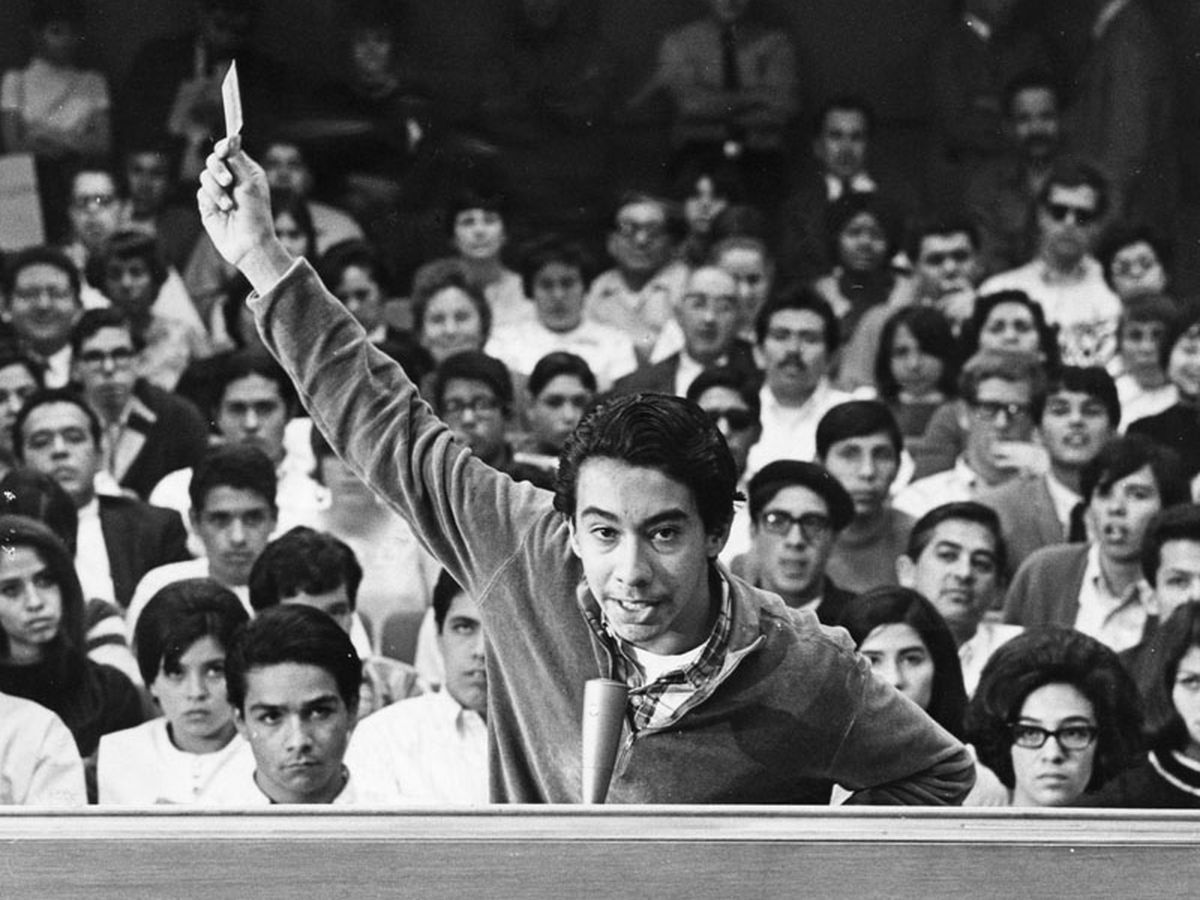
An East LA high school student at the microphone of a school board meeting in 1968. (Los Angeles Public Library photo collection)
During the first week of March in 1968, more than fifteen thousand students walked out of their high schools in Los Angeles, kicking off the largest student walkout in US history. The students, mostly Mexican Americans, were fed up with a school system that had given them de facto segregation, English-only instruction, and irrelevant curricula. The walkout, coordinated by student committees at each school, demanded more Latino faculty members, better facilities, and educational material that spoke to Mexican Americans’ diverse experience.
An East LA family named the Cuaróns were at the center of the walkout. Even before the events of March ’68, the Cuarón home had served as a meeting place for radicals. Mita Cuarón was a student at Garfield High School, so involved in organizing the walkout that the administration singled her out as a leader and school guards attacked her. Mita’s mother, Sylvia Cuarón, was one of the first parents down on the picket line to help support and protect the striking students. And her father, Ralph Cuarón, was elected as the students’ representative in subsequent negotiations with school administrators.
Neither the walkout by Mexican-American students nor the Cuarón family’s central role in the action were coincidences. Mexican Americans in the Southwestern United States had long organized in their neighborhoods and workplaces, buoyed by a strong tradition of radicalism. Both Sylvia and Ralph were longtime members of the Community Party USA (CPUSA), ideologically committed yet practical in their efforts on behalf of Mexican Americans, whether through labor unions or civil rights organizations. When Ralph was chosen to represent the student strikers, he understood what they were up against, saying: “The situation did not require soft-spoken individuals to go in front of armed policemen and agitated principals, with all of the laws on their side, who were determined to punish young people one way or another.”