Why We Need Working-Class Cultural Institutions
Creating a vibrant left ecosystem doesn’t just mean building stronger labor and tenant unions — it means building cultural institutions that prize democracy over privatization and embed themselves in everyday working-class life.
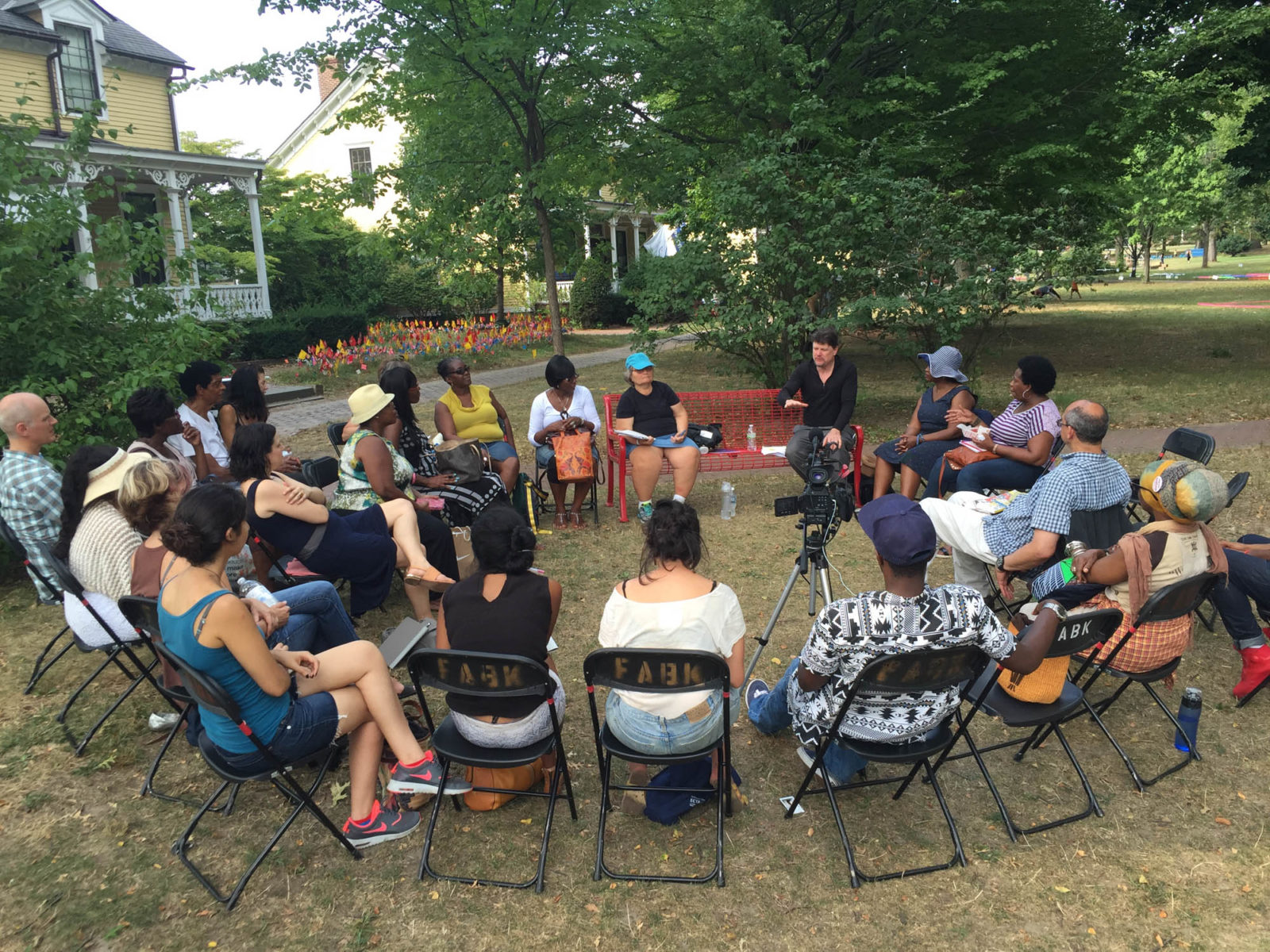
Mark Nowak’s Worker Writers School at Governor’s Island. (WWS)
There’s one thing we all know: the Left needs stronger institutions. That this means expanded and emboldened labor and tenant unions — flexible and democratic and able to extend solidarity to popular left uprisings in whatever form they take — might be obvious enough. But a vibrant world of left institutions has historically meant much more.
You could write a cultural history of the Left that looks not only at strikes, movements, and revolutions, but the cultural institutions flowing into these processes. You might include the jazz collective Underground Musicians Association, the artist-activist organization Studio Watts Workshop, and the education-based Watts Towers Arts Center, all of which, as historian Robin D. G. Kelley argues, contributed to the “dynamic civil society” undergirding Los Angeles’s 1965 Watts Rebellion. You might tell the story of the festivals, cycling clubs, and grocery stores of early German Social Democracy; the underground workers’ film screenings keeping alive Marxist debate in late 1960s junta-controlled Argentina; or the People’s Parks and People’s Houses of early Swedish Social Democracy, cultural spaces that, to quote a recent article in Places Journal, “turned the often tedious and slow-grinding business of political organizing into a more communal venture where new solidarities could be explored and strengthened.”
What might this mean for today’s Left? Culture, like so much of our social fabric, has moved increasingly toward enclosure, from the atomized streaming world of the culture industry to the privatizations and slashed budgets of our museums, universities, and community centers. But there remain glimmers of another cultural sphere, one that answers privatization with democracy and integrates itself into working-class life.