There’s No Such Thing as “the Latino Vote”
Latino voters, just like any other group, are divided along class and ideological lines. The key to winning working-class Latinos to a left politics is to offer a positive vision that materially improves their lives.
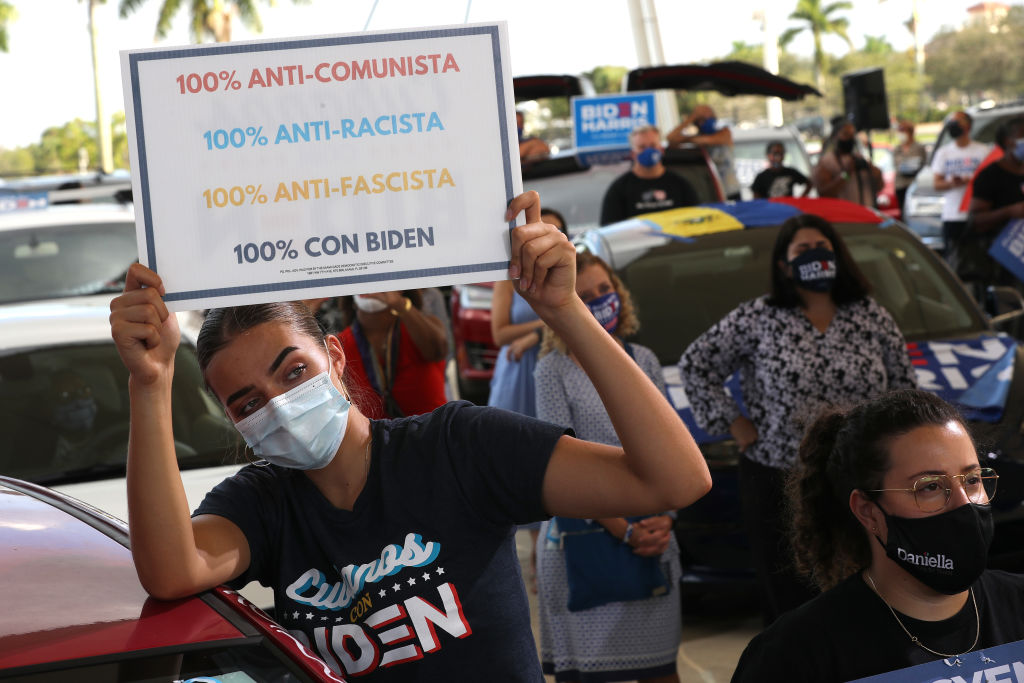
Sophia Hildalgo (L) and Amore Rodriguez of Miami stay with their car decorated in “Cubans for Biden paint as Democratic presidential nominee Joe Biden delivered remarks during a drive-in voter mobilization event at Miramar Regional Park on October 13.(Chip Somodevilla / Getty Images)
Election after election, the “Latino vote” continues to frustrate statistical forecasters and political prognosticators, who continually predict that an imminent Latino wave will cement a majority for the Democratic Party. This expectation, predicated on the idea that Latinos will naturally gravitate toward progressive politics, places blind faith in changing demographics, ignoring the hard work of political organizing and policy-driven outreach.
Despite assumptions that the nativist and xenophobic forces now dominating the Republican Party would repel Latino voters, early evidence suggests that Donald Trump increased his share of Latino support nationwide. While this might seem surprising, historian Geraldo Cadava’s new book, The Hispanic Republican: The Shaping of an American Political Identity, From Nixon to Trump, offers an important account of how the Republican Party has cultivated support among Latinos since the 1970s. Moving beyond a limited view that typecasts Hispanic Republicans as simply Cuban exiles or conservative Catholics, Cadava traces a longer history of patronage politics and institution building that has, over time, yielded a loyal and influential base within the Republican Party.
In the following interview by Jaime Acosta Gonzalez, Cadava discusses the formation of Hispanic Republican identity, the challenges of defeating an anti-communist message, and how we might get beyond thinking about Latinos as a monolith.