Burma’s Coup Shows How Little Power the Military Ever Gave Up
The military coup against Aung San Suu Kyi marks the end of Burma's ten-year experiment with democracy. Her government spoke of national reconciliation while denying the military's atrocities and doing nothing to stop its war on ethnic minorities — an explicit refusal to "take sides" which ensured the armed forces would continue to dominate the country's politics.
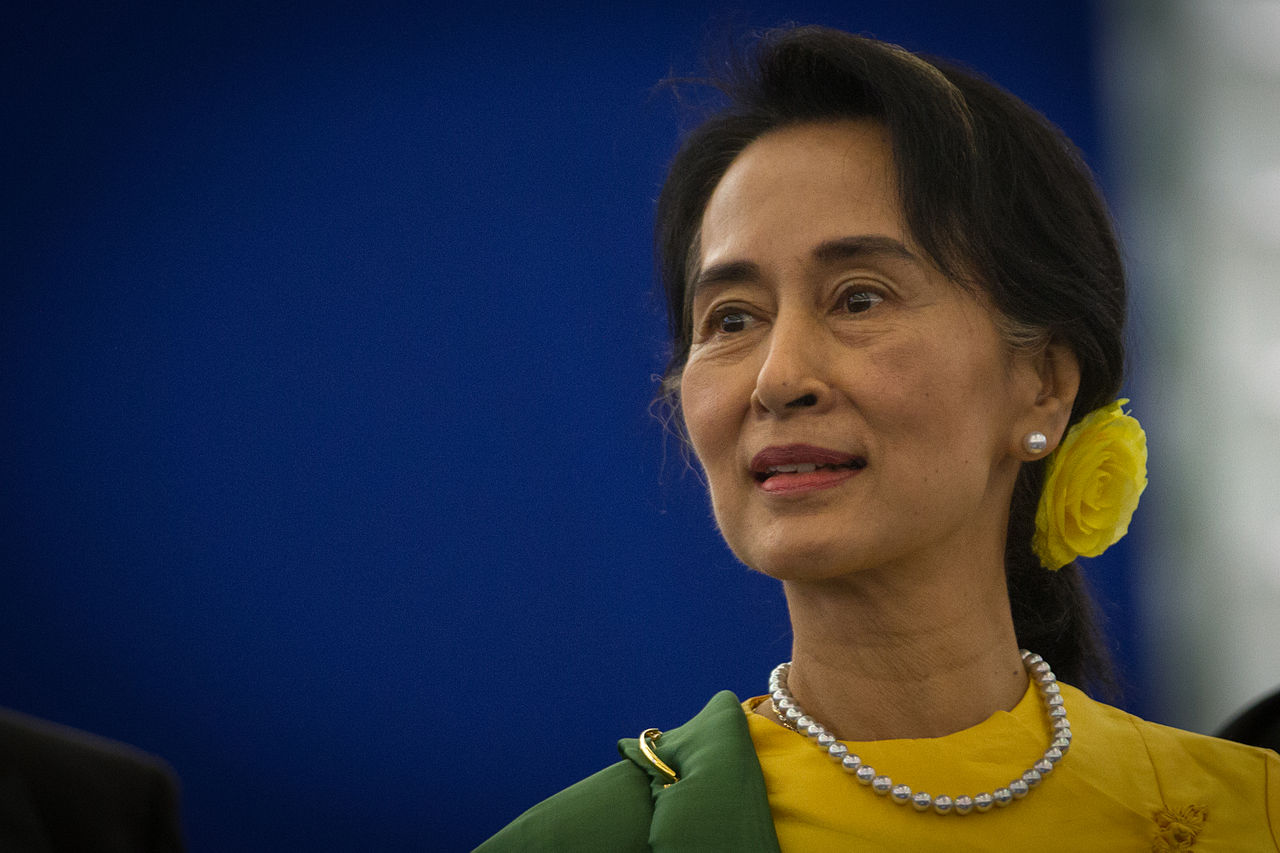
Aung San Suu Kyi on October 22, 2013. (Claude Truong-Ngoc / Wikimedia Commons)
On February 1, Burma’s military put an end to the country’s ten-year experiment with democracy with a coup that can best be described as a partial “self-coup.” Tatmadaw (as the armed forces are known locally) already held considerable power and virtually total autonomy from civilian oversight, according to a power arrangement designed by the junta that ruled the country between 1988 and 2011.
The takeover is puzzling for its apparent irrationality: Why would the generals now take the risk of dismantling the system they have so painstakingly built, which has served them well so far, and does not seem to be immediately threatened? After all, the coup removed a civilian government, led by the Nobel laureate and former dissident Aung San Suu Kyi, that after its first five-year term had given ample proof that it did not pose any threat to the military’s interests. Instead, it had proven to share a virtually identical worldview.
It had been a decade since the establishment of a so-called discipline-flourishing democracy carefully managed by the generals. This arrangement was initially praised by investors and the very same Western countries that had hitherto isolated Burma for the human rights violations committed by a military that had ruled the country in different iterations for almost fifty years. But this Monday, the commander in chief of the Tatmadaw, senior general Min Aung Hlaing, took power a few hours before the first session in parliament since November’s elections.