Joe Biden’s Central America Plan Is a Cruel Joke
Joe Biden has pledged to pour money into Central America to address the root causes of migration. There’s just one problem: the aid dollars would be used to shore up the militarized, free-market model that is making people flee in the first place.
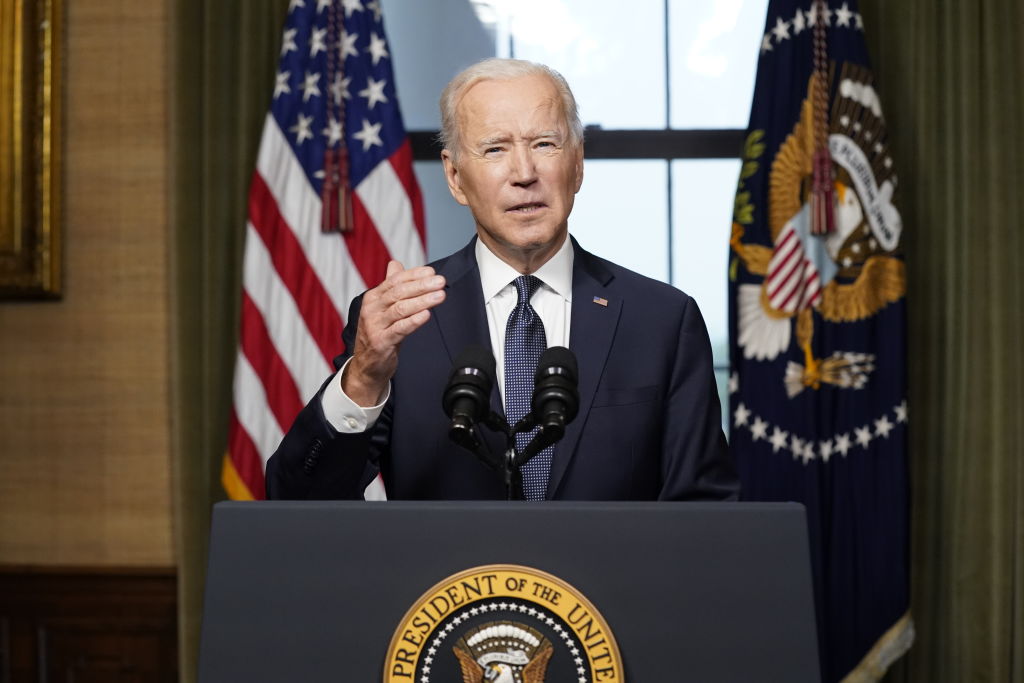
President Joe Biden on April 14, 2021 in Washington, DC. (Andrew Harnik / Pool-Getty Images)
Joe Biden entered the White House promising to reverse Donald Trump’s draconian anti-immigrant policies while, through his “Plan to Build Security and Prosperity in Partnership with the People of Central America,” restoring “US leadership in the region” that he claimed Trump had abandoned. For Central Americans, though, such “leadership” has an ominous ring.
Although the second half of his plan’s name does, in fact, echo that of left-wing, grassroots organizations like the Committee in Solidarity with the People of El Salvador (CISPES), its content highlights a version of security and prosperity in that region that’s more Cold War–like than CISPES-like. Instead of solidarity (or even partnership) with Central America, Biden’s plan actually promotes an old economic development model that has long benefited US corporations. It also aims to impose a distinctly militarized version of “security” on the people of that region. In addition, it focuses on enlisting Central American governments and, in particular, their militaries to contain migration through the use of repression.
Linking Immigration and Foreign Policy
The clearest statement of the president’s Central America goals appears in his US Citizenship Act of 2021, sent to Congress on January 20. That proposal offers a sweeping set of changes aimed at eliminating President Trump’s racist exclusions, restoring rights to asylum, and opening a path to legal status and citizenship for the immigrant population. After the anti-immigrant barrage of the last four years, that proposal seems worth celebrating. It follows in the footsteps of previous bipartisan “comprehensive” compromises like the 1986 Immigration Reform and Control Act and a failed 2013 immigration bill, both of which included a path to citizenship for many undocumented people, while dedicating significant resources to border “security.”