How Yemen’s Old Order Snuffed Out the Country’s Hopes for a New Dawn
Ten years ago, inspired by revolts in Egypt and Tunisia, Yemenis challenged an authoritarian ruler and dared to dream of a new future for their country. But a backlash by Yemen’s old guard and interference by foreign powers crushed those hopes and plunged the country into war.
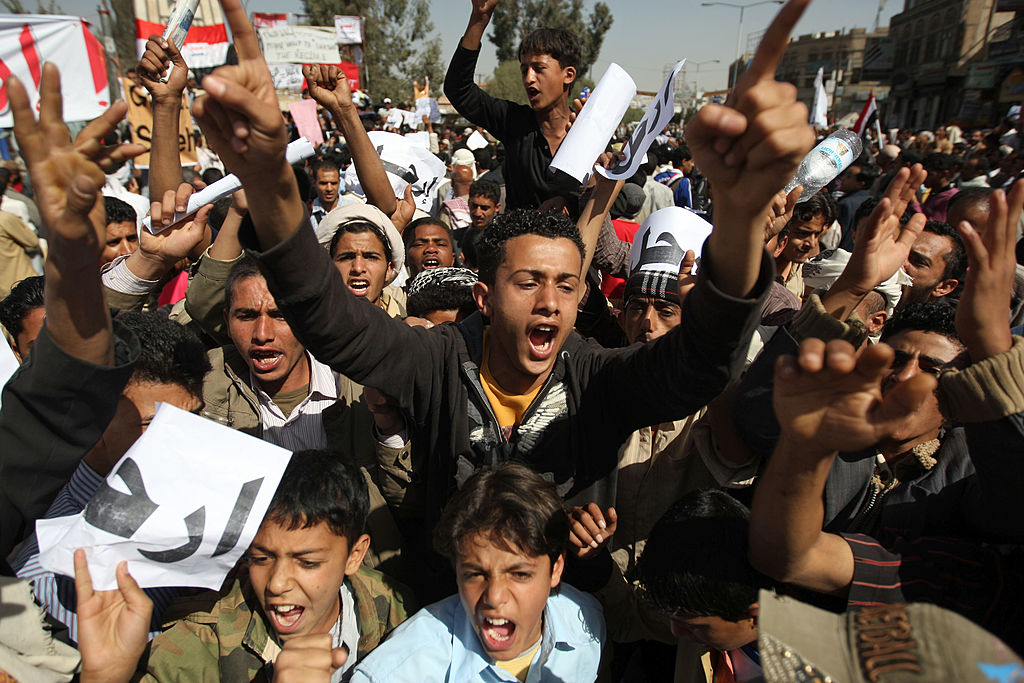
Yemeni protesters chant slogans calling for the ouster of President Ali Abdullah Saleh during a demonstration in the capital, Sanaa, on February 21, 2011. (Ahmad Gharabli / AFP via Getty Images)
In early 2011, hundreds of thousands of Yemenis created “change squares” throughout the country, demanding political, economic, and social transformations of their country. They wanted the removal of Yemen’s long-serving leader, Ali Abdullah Saleh, and the system he had managed for decades.
The slogans that Yemen shared with many other Arab countries at the time were first and foremost Irhal (“Get out”) and Yaskut al Nidham (“Down with the system”). Saleh had been in power for almost thirty-three years, first running the northern Yemen Arab Republic and then the Republic of Yemen, after its unification with the southern People’s Democratic Republic of Yemen in 1990. His government was now basically collapsing under the strain of multiple issues.
People held Saleh personally responsible for high levels of corruption and the increasing poverty of the majority of Yemenis, which contrasted sharply with the ostentatious wealth of his close associates. They railed against the lack of economic opportunities and high youth unemployment, not to mention the military conflict in the far north against the Huthi movement, and the rise of southern separatism at the other end of the country.