How Tunisia’s Women Communists Challenged the Colonial Order
Tunisia under French colonial rule was deeply undemocratic, with a social order built on formalized racial categories and the near exclusion of women from public life. But women Communists refused to accept a merely subordinate role — and built the only organizations that united Tunisians across the official racial divides.
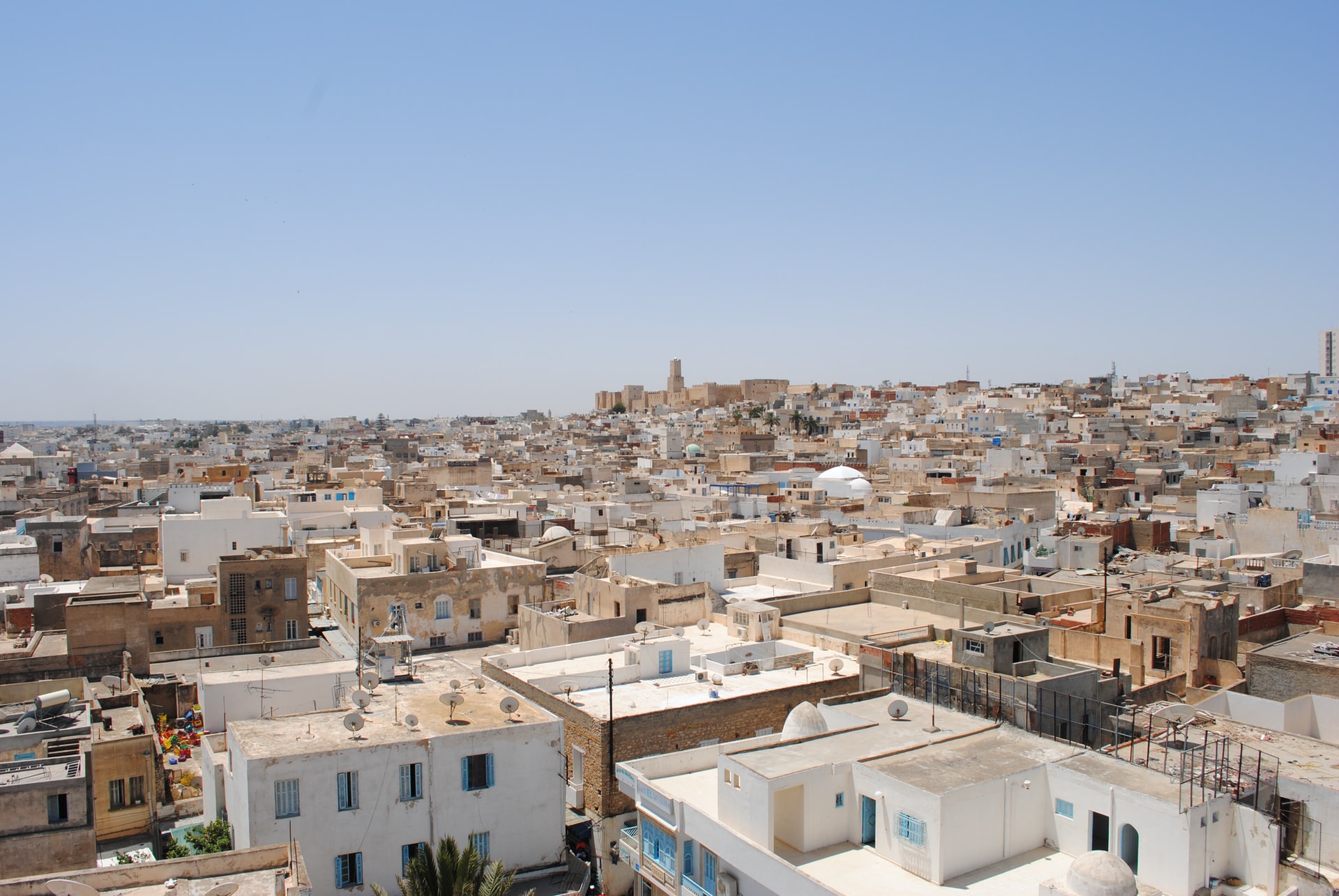
A view of Sousse, Tunisia. (Unsplash)
On March 16, 2016, when late Juliette Bessis welcomed me at her apartment, I had the chance to meet a woman who was not only the author of several works important to my research but one of the lead actors in the history I was studying. For Bessis (née Juliette Saada in southern Tunisia in 1925) was one of the women militants active in the Tunisian Communist Party (PCT). With the help of her daughter Sophie — like her a historian — I was able to interview one of the women militants who had been active in the PCT from its World War II–era underground struggle until its suppression in 1963.
One hundred years since the party’s origins at the Tours Congress of December 1920, there are still many reasons to delve into these women’s history. The PCT’s heirs have been transformed since the 1980s, not least since their involvement in the Al-Massar movement during the revolution that brought down president Zine El Abidine Ben Ali on January 14, 2011. But if the tenth anniversary of the events that launched the Arab Spring saw widespread media emphasis on women’s role in the uprising, speaking to militants like Bessis also helps us understand the much longer history of women’s involvement in Tunisian revolutionary politics.
A Tunisian Communism
The PCT had its first origins in a group of socialists who sided with the Communist International at the Tours Congress in December 1920. This congress gave rise to the French Section of the Communist International (SFIC, later French Communist Party, PCF), of which the Tunisian party was initially a federation.