The Fate of the Revolution
Tunisia’s ruling class is pursuing the same economic policies as the authoritarian regime it replaced.
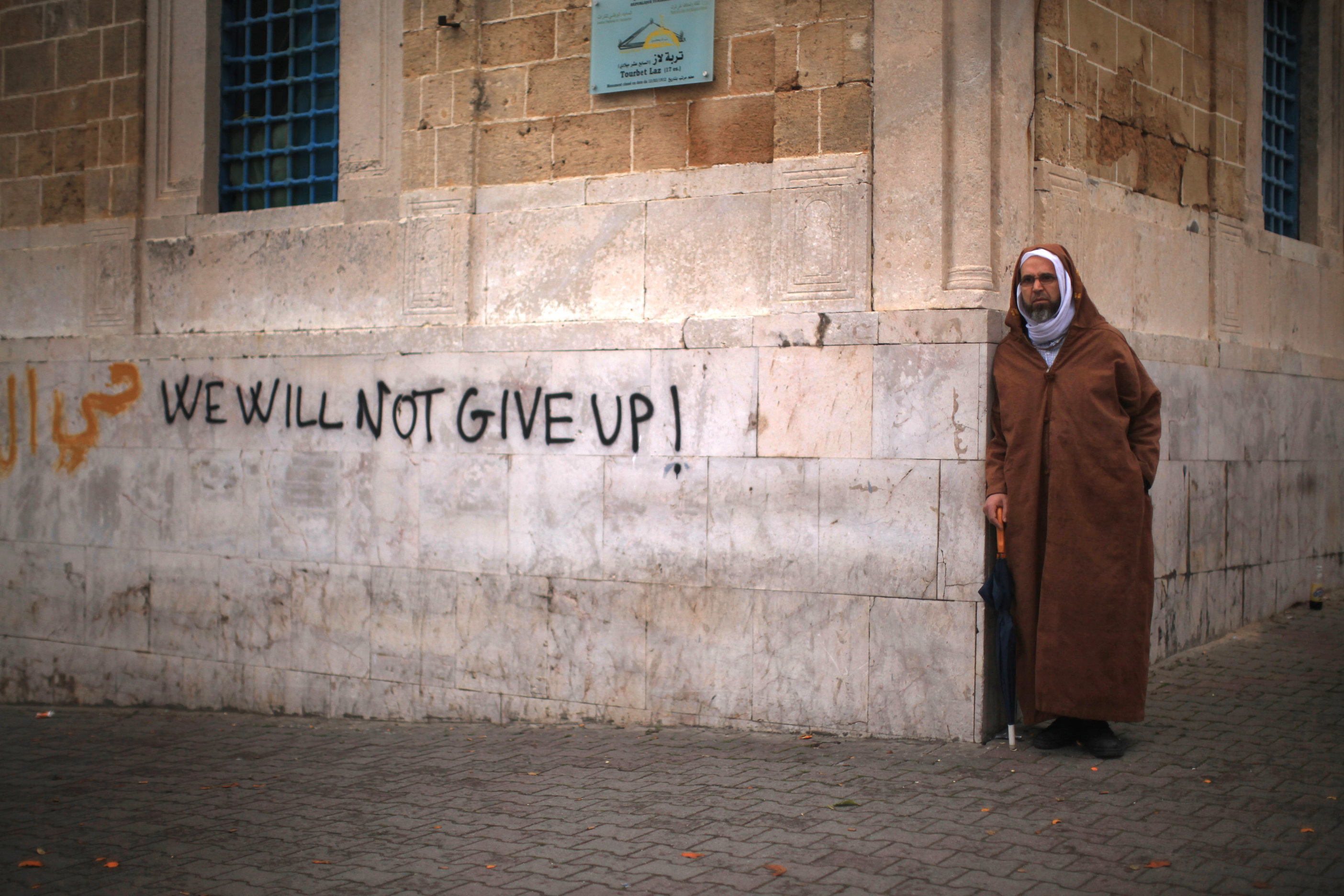
A Tunisian man looks on next to graffiti as protesters continue their demonstrations outside Prime Minister Mohammed Ghannouchi’s offices in Government Square Tunis on January 25, 2011 in Tunis, Tunisia. Christopher Furlong / Getty
In the first half of January, a wave of protests spread across Tunisia. Most observers say that the new finance law, implemented at the beginning of the year, sparked them.
Indeed, these demonstrations are taking place against a backdrop of harsh austerity measures. But neoliberal reform in Tunisia is nothing new. In fact, the government has continuously put such measures in place since Ben Ali’s 2011 overthrow.
On the one hand, there’s a risk of reading too much into recent events: though demonstrations have been organized across the country to express broad discontent, neither their size nor their composition presage a rapid uprising capable of destabilizing the political forces now in power.