The Radicalism of Thaddeus Stevens
The Civil War and Reconstruction–era Radical Republican Thaddeus Stevens understood far better than most of his contemporaries that fully uprooting slavery meant overthrowing the South’s economic system and challenging property rights — first the right of some human beings to own others, but also beyond it.
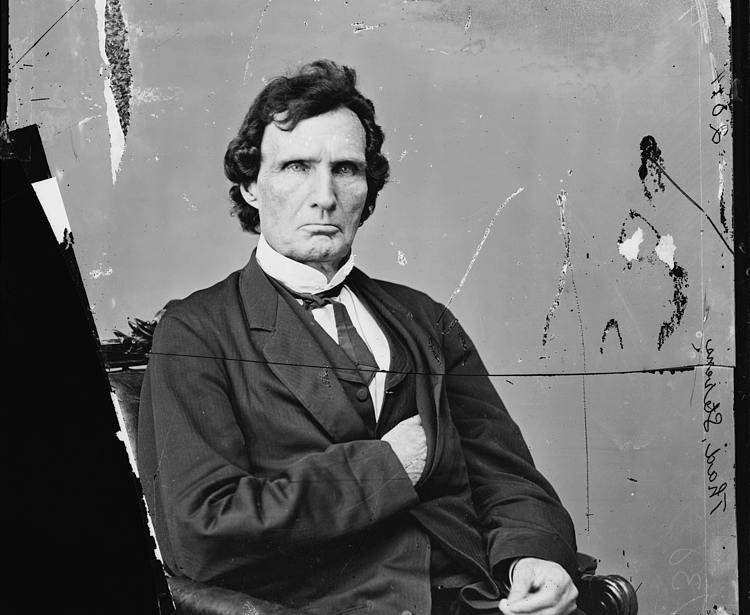
The reputation of Thaddeus Stevens, the most controversial statesman of his era, has fluctuated widely. (Library of Congress)
If French Jacobinism had a corollary during the Second American Revolution, it was embodied by Thaddeus Stevens. A leading abolitionist in the House of Representatives during the antebellum period, the man who came to be known as the Great Commoner emerged during the Civil War as de facto leader of the Radical Republicans and a standard-bearer for the causes of emancipation, the enlistment of black soldiers, African American suffrage, and land reform. Exploiting wartime conditions to pursue a radical revolution capped by a confiscation policy that would redistribute Confederate land to formerly enslaved people, Stevens understood as few others did that uprooting slavery meant overthrowing the South’s economic system and challenging property rights beyond property in human beings.
But as the most controversial statesmen of his era, Stevens’s popular reputation has fluctuated widely, falling and rising in inverse proportion to Jim Crow and the Lost Cause. He was for a century one of the most reviled figures in American history. Conversely, when civil rights and justice movements have surged, his popular reputation has consistently been rejuvenated.
In that sense, Bruce Levine’s Thaddeus Stevens: Civil War Revolutionary, Fighter for Racial Justice provides an anticipated and most welcome update of this anti-racist champion in the age of Black Lives Matter, falling Confederate monuments, and rising calls for transformational policy.