Nomadland Is a Great and Terrible Film
While Nomadland goes out of its way to avoid talking politics, its genius is in locating the emotional truth of what it’s like to be one of the many millions of Americans cast adrift by disaster.
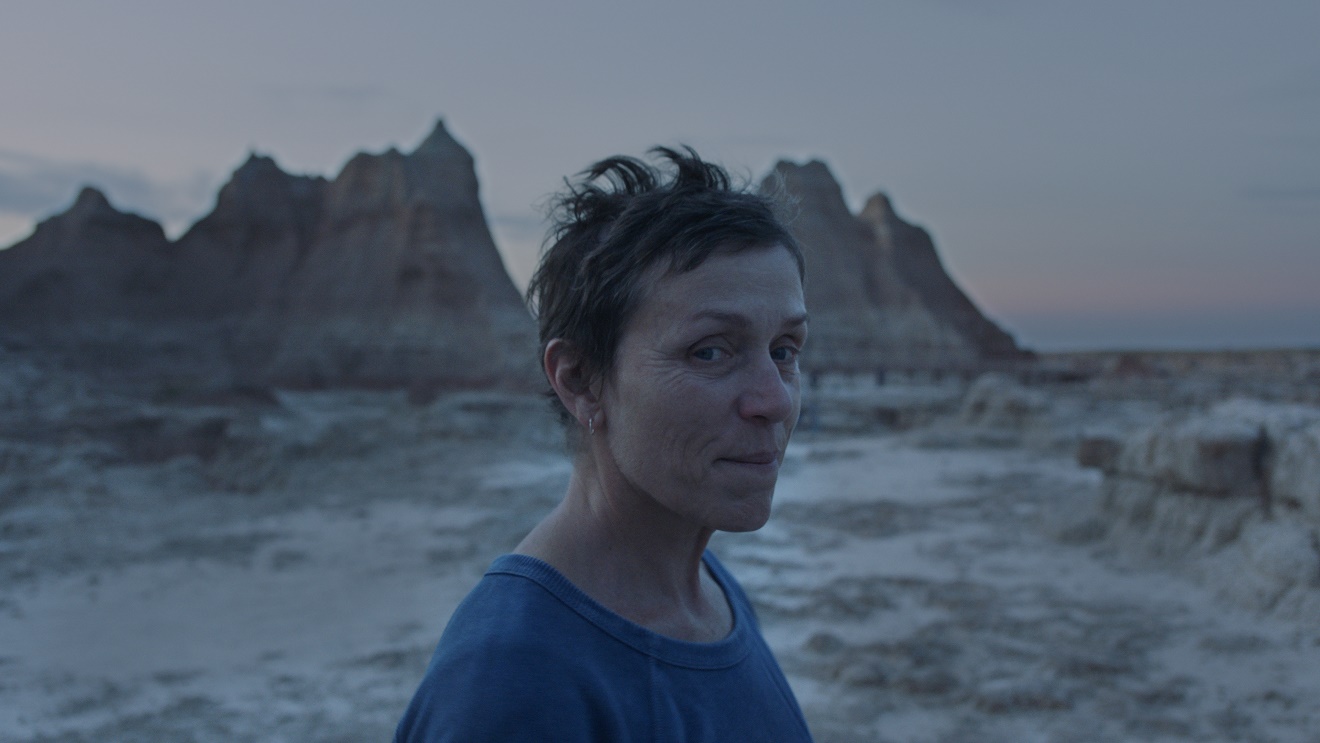
Fern (Frances McDormand) takes to the road in her van and discovers she’s one of many thousands of elderly Americans forced into an impoverished, nomadic life. (Searchlight Pictures)
Nomadland is a schizophrenic cinematic experience that may have you arguing with yourself as well as others for hours or even days after viewing it.
On the one hand, it’s an emotional powerhouse of a film, terribly moving, painfully relevant to our grim times, and written and directed by the extremely gifted Chloe Zhao (The Rider) in a style of restrained beauty. It’s centered on Frances McDormand as Fern, a widow in her sixties who’s been forced out of her home and her life in Empire, Nevada, a one-industry town that was destroyed in real life by the closing of the US Gypsum plant. Employees like Fern were evicted from company housing when the plant shut down.
Fern takes to the road in her van, and soon discovers she’s one of many thousands of elderly Americans forced into an impoverished, nomadic life. Surrounded by a cast largely made up of actual “nomads,” such as Linda Mae, (Charlene) Swankie, and Bob Wells playing themselves, and doing some of the best nonprofessional acting I’ve ever seen outside of an Italian neorealist film, McDormand gives a performance that’s so admirably direct, intense, and spare, she’ll win all the awards or there’s no justice in this world. (And we realize there’s almost no justice in this world.)