Nomads in Search of a Villain
The new film Nomadland is a heartfelt look at the lives of itinerant Americans cast aside by the Great Recession. But it ignores how employers like Amazon are raking in profits off this new class of worker.
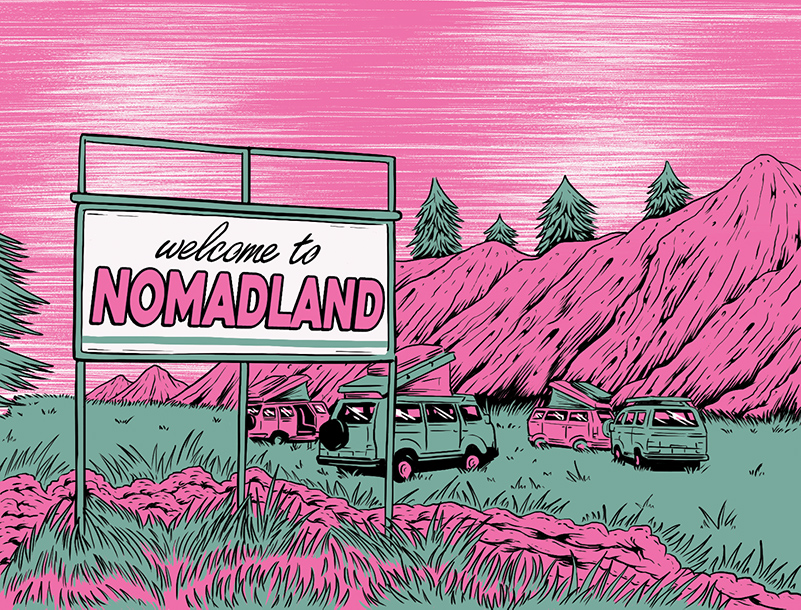
Illustration by Cat Sims
In the aftermath of the 2008 housing crash, millions of Americans were unable to pay their mortgages. Some of them had always struggled financially, while others had been secure until the Great Recession emptied their savings accounts and shattered their lives. For some, there seemed to be no alternative but packing up everything and hitting the road — for good.
The film Nomadland, based on journalist Jessica Bruder’s 2017 nonfiction book of the same name, brings audiences into the world of people who live in their vans and campers while crisscrossing the continental United States picking up seasonal jobs. While Chloé Zhao’s film is itself a work of fiction, she uses the book’s details to send a fictional central character named Fern (Frances McDormand) on a journey with real-life nomads straight from the text, placed in many of the same locations Bruder describes. As the director has put it, the character of Fern serves as a “guide” for the audience, bringing them into this unknown American world.
The film provides an empathetic portrayal of these nomads. Between capturing the relationships between these itinerant Americans and the beautiful landscapes they inhabit on their journeys, the film doesn’t shy away from pointing the finger at the financial crisis for the plight they face. Yet it does surprisingly downplay how employers across the country take advantage of them.