As German Unions Struggle to Save Jobs, Worker Buyouts Are on the Rise
Germany's employment model is under attack, as mass closures and cost-cutting businesses make once-stable engineering jobs ever more precarious. Some trade unionists have turned to worker buyouts as a means of saving jobs — a move that hands workers more control of their situation, but also brings dangers of its own.
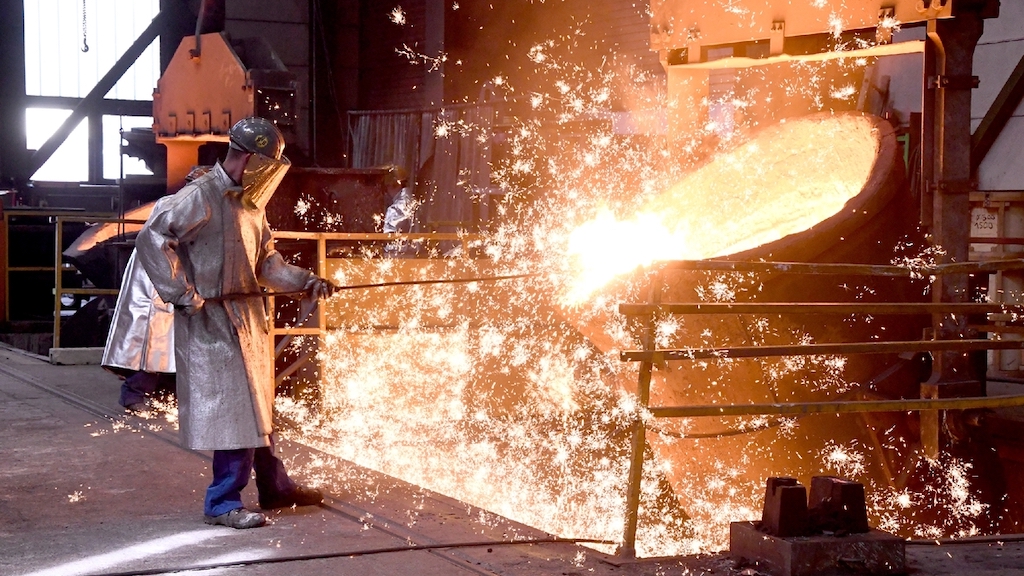
Smelters working at Huttenwerk Koenigsbronn GmbH, the product of an employee buyout of the 655-year-old Schwabische Huttenwerke in southern Germany.
Facing an unprecedented wave of mass workplace closures, Germany’s leading engineering union, IG Metall, now finds itself fighting a defensive battle to protect jobs. At the 655-year-old Schwabische Huttenwerke steel and iron smelter in the small southern town of Koenigsbronn, the union took the radical step of supporting an employee buyout — a takeover plan developed by shop-floor workers to save their jobs by buying the firm themselves. Reopened last April as Huttenwerk Koenigsbronn GmbH, the plan has saved 74 union jobs, and is now one-third worker owned. A contractual right of first refusal further paves the way for eventual full employee ownership.
In some ways, this isn’t entirely new. IG Metall is following in the footsteps of a number of its sister unions around the world, notably the Sindicato dos Metalúrgicos do ABC in Brazil (SMABC) and the United Steelworkers (USW) in America. These unions have each used employee buyouts, conversions, and cooperatives as early as the 1980s to successfully resist the effects of industrial decline. The German model of industrial relations and union practice itself have historically differed from each of these other contexts, placing much greater stress on sectoral collective bargaining, but as this model comes under significant pressure, unions like IG Metall are now being forced to look for other means of protecting jobs.
The German Context
Europe’s largest trade union and a trendsetter in improving workers’ conditions nationally, IG Metall is a force to be reckoned with. In 2018, it secured for its members the right to a twenty-eight-hour week, a 4.3 percent pay raise, and an extra eight days of vacation (or of extra pay) for workers with children. Unlike bargaining models in the anglophone world, the German model has unions negotiate primarily with employers’ associations rather than individual firms. This form of “sectoral bargaining” ensures collective agreements apply to vast swathes of the industry covering numerous firms. This model is based in large part on good faith and voluntary codetermination between the social partners rather than on law. IG Metall has thus tended to neglect strategies that may undermine or draw resources away from this highly successful model of collective bargaining, which has hitherto delivered increasing returns for its members.