Why the Alt-Right Will Lose
Thankfully, almost nobody likes a Nazi, and even fewer still like a Nazi steeped in a creepy online subculture.
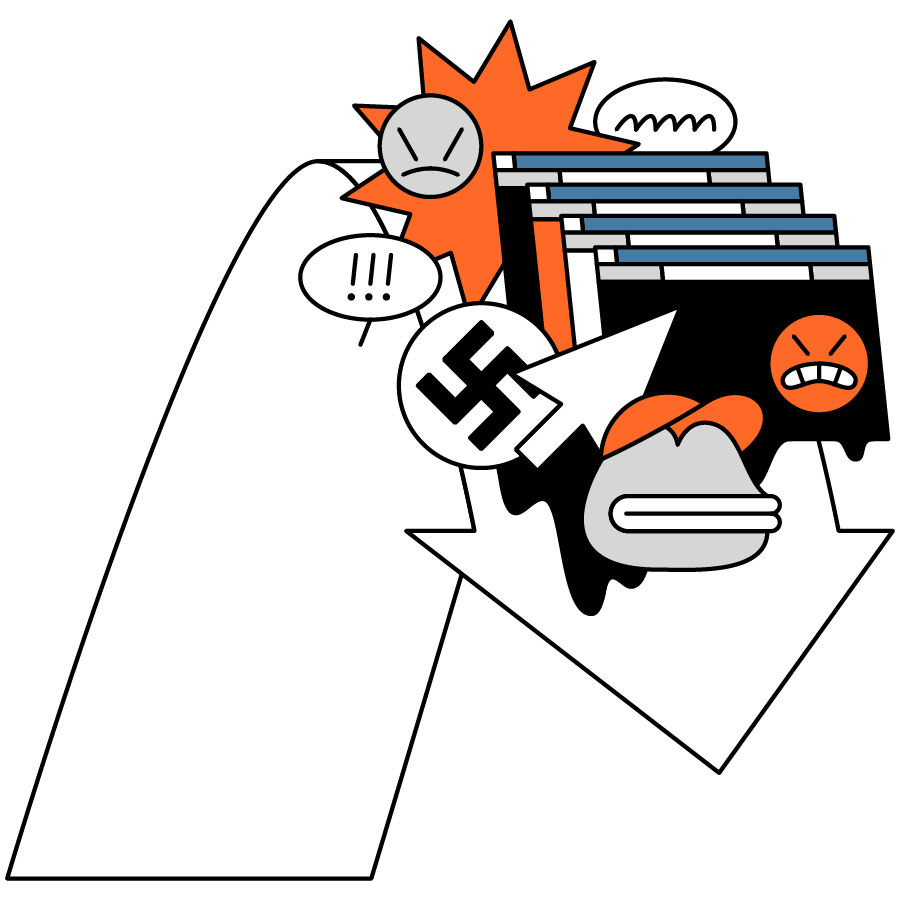
Illustration by Rose Wong
A few months before Hillary Clinton lost the 2016 presidential election, her campaign released a sober statement on a dangerous new right-wing force ready to usher Donald Trump into the presidency. “That cartoon frog is more sinister than you might realize,” the campaign’s memo warned. The frog in question, of course, was Pepe, the meme mascot of the alt-right, an amorphous group of white supremacists and far-right ideologues incubated in the bowels of 4chan and other message boards.
For a brief time during the 2016 election and after, the alt-right did appear to be on the ascent. That November, a few days after Trump’s upset win, self-identified members of the movement gathered in a DC conference room to celebrate. (“Hail Trump, hail our people, hail victory!” Richard Spencer shouted at the event to a round of sieg heils from the audience.) By August of the next year, Spencer and around two hundred other white supremacists would infamously march on Charlottesville, Virginia, and one would drive his car into a crowd of counterprotesters, killing demonstrator Heather Heyer. In the aftermath of the rally, when Trump wavered on condemning the white-power marchers, liberals and the alt-right alike interpreted his reticence as a sign of his approval. “He did the opposite of cuck,” Andrew Anglin, the founder of the neo-Nazi publication the Daily Stormer, said triumphantly.
But if the alt-right reached its height during the early months of Trump’s term, it was, in retrospect, an unstable and short-lived peak. Despite the Clinton campaign’s ominous advisory on the cartoon frog and the media’s perpetual fascination with Spencer, the alt-right was never much more than a fringe subculture devoid of any real political power. Thrilled as they may have been by Trump’s rise, the alt-right had little role in his election and no real lasting influence on his administration. (Steve Bannon, the closest thing to a conduit to the White House for the alt-right, dismissed them as “losers” and “clowns” following the rally in Charlottesville, and many members of the alt-right themselves, including Spencer, would go on to disavow the president before his term was up.) The group’s swift unraveling during the Trump years — at least partly a function of their own repellent behavior — helps contextualize right-wing extremism in the United States today and also offers some lessons for the Left on the diminishing returns of marrying politics to subculture.