Sydney’s Gay and Lesbian Mardi Gras Should Stand for Solidarity With the Oppressed — Not With Cops and Corporations
From its radical roots in the 1970s, the Sydney Gay and Lesbian Mardi Gras has gradually been captured by conservative, pro-corporate interests. The festival should be more than a corporate street party: it needs to recover its original spirit by empowering Mardi Gras members.
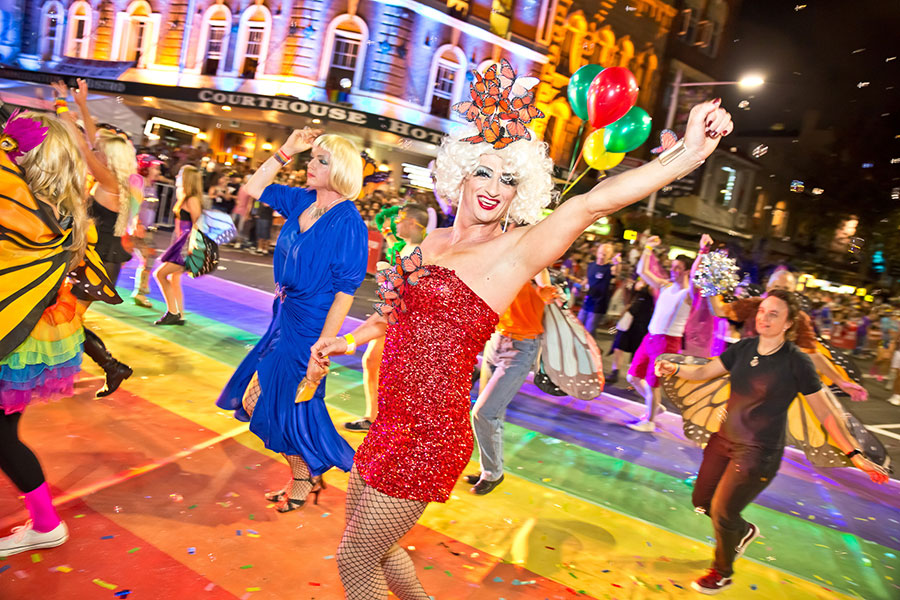
The conservative evolution of Sydney’s Gay and Lesbian Mardi Gras represents a sharp break with its radical, working-class traditions. (Photo: Tourism Australia)
On June 24, 1978, Sydney’s Gay Solidarity Group responded to a call for an international day of protest put out by gay and lesbian activists from San Francisco. They went on to organize the first Gay and Lesbian Mardi Gras.
A thousand people attended the festival and march from Kings Cross to Oxford Street. Halfway through the event, Sydney’s police force suddenly withdrew their permit, pushing the crowd into Hyde Park. Instead of dispersing, the marchers fought their way to Kings Cross, where the police arrested fifty-three people. Since then, the Mardi Gras has been held annually, in defiance of homophobia and police persecution.
Today, the Sydney Mardi Gras (MG) parade and festival — held on March 6 — has grown to become one of the city’s most prominent cultural attractions. As with similar pride events worldwide, the Sydney establishment has come to see it as a significant driver of “rainbow tourism.” In 2018, Forbes magazine calculated that “investment from the New South Wales Government in the Sydney Mardi Gras, between 2009 and 2017, has produced an estimated return of more than AU$265 million ($205 million) in visitor spend.”