For Jack Mundey, Union Militancy and Environmentalism Went Hand in Hand
With the death this week of Jack Mundey, Australia has lost a giant of trade unionism. His green-socialist vision put labor militancy and democratic control at the heart of society and pushed back against the rapaciousness of urban development.
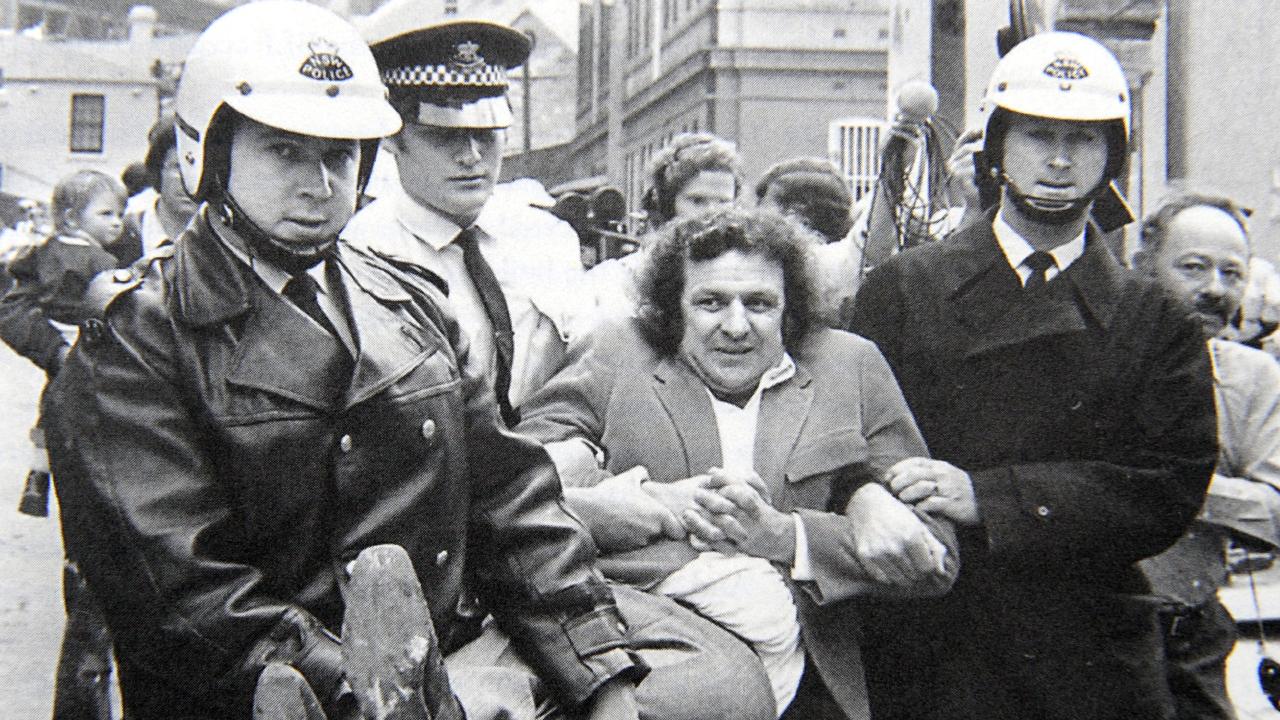
Jack Mundey was a legendary figure in the Australian trade union movement. A member of the Communist Party from the late 1950s until its dissolution in 1991 and later, a member of the Australian Greens, Mundey maintained a lifelong commitment to solidarity. As an elected leader of the New South Wales branch of the Builders Labourers Federation (BLF) from 1968 to 1973, he pioneered the pathbreaking “green bans” that combined union power with the environmental movement. Together, building workers and community groups saved urban green spaces, preserved workers’ houses in the inner city, and guarded valuable historic buildings against demolition. This movement began in Sydney, but its legacy lives in landmark buildings like Melbourne’s Queen Victoria Market and Flinders Street Railway Station, and Brisbane’s The Mansions.
The early 1970s were the high-water mark of the Australian union movement, and the communist-led BLF was at the forefront of the commitment to rank-and-file-driven strategies, union democracy, and broad solidarity. In Mundey’s time as a leader of the BLF, union leaders were elected and paid the same rates as the workers they organized. When Aboriginal stockmen went on strike, the union toured them on construction sites to build solidarity. Elsewhere, they downed tools to force universities to allow a women’s liberation course and to rescind the expulsion of a gay student. The BLF pushed employers to hire women as builders’ laborers for the first time and organized in solidarity with the people of Vietnam and the campaign against apartheid in South Africa.
At the peak of the BLF’s strength, not only did construction workers win significant improvements to wages and conditions, they began to assert control over their workplaces and to determine the “end result of labor.”