Everything You Always Wanted to Know about QAnon But Were Too Weirded Out to Ask
Much of the news these days is unhinged, but nothing can compare, in terms of pure lunacy, with QAnon. The Daily Beast’s Will Sommer, longtime observer of the far right, spoke with Jacobin to explain QAnon’s origins and evolution — and why he thinks the movement is here to stay even if "Q" and "The Storm" are never heard from again.
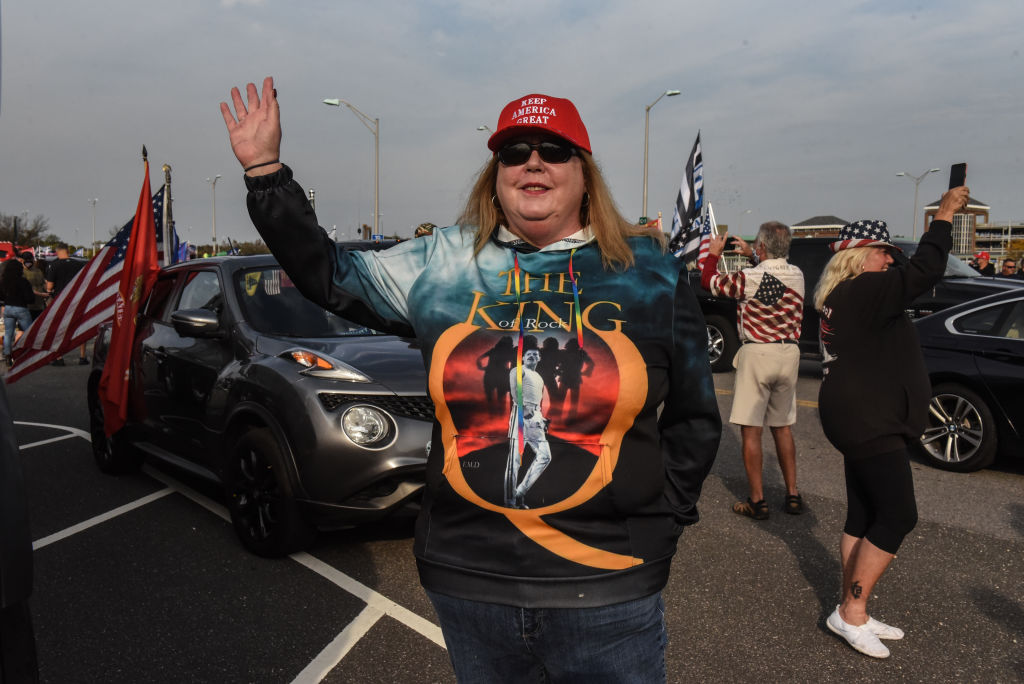
A woman wearing a sweatshirt for the QAnon conspiracy theory gestures during a pro-Trump rally in Ronkonkoma, New York, 2020. (Stephanie Keith / Getty Images)
Amid all the chaos, ugliness, and otherworldly strangeness of the Trump era, few phenomena have proven as perplexing as QAnon. On October 30, 2017 an anonymous 4chan post from an account called Q claimed that Hillary Clinton’s arrest was imminent, spawning what quickly became a vast digital community of people trying to interpret and decipher Q’s cryptic messages — messages they believe suggest that a vast empire of global elites was about to face justice, courtesy of sealed indictments in the hands of Donald Trump.
With remarkable speed, the far-right conspiracy entered the mainstream and was soon earning less than subtle nods from Trump himself. It’s since been linked to murders, kidnappings, and even an armed standoff at the Hoover Dam. Its supporters have run for (and been elected) to Congress. Its visibility and influence notwithstanding, much about the QAnon conspiracy remains elusive — not least the specific nature of the conspiracy itself.
Due to the cryptic style of the posts that originally inspired it, the Q-verse has become a sprawling network of competing interpretations and micro-sects. With Donald Trump’s defeat and the swearing-in of a new Democratic president, QAnon now faces the existential paradox of a prophecy that has failed to materialize — a development which raises significant questions about the future of a group whose influence now reaches deep into the Republican base.