Trump Is a Threat to Democracy. But That Doesn’t Mean He’s Winning.
The violent attempt to stop the certification of the electoral vote shouldn’t be ignored. But fascism isn’t on the brink in America. Pretending we’re on the precipice of losing our democracy plays into the hands of those who want to give new, repressive powers to the security state.
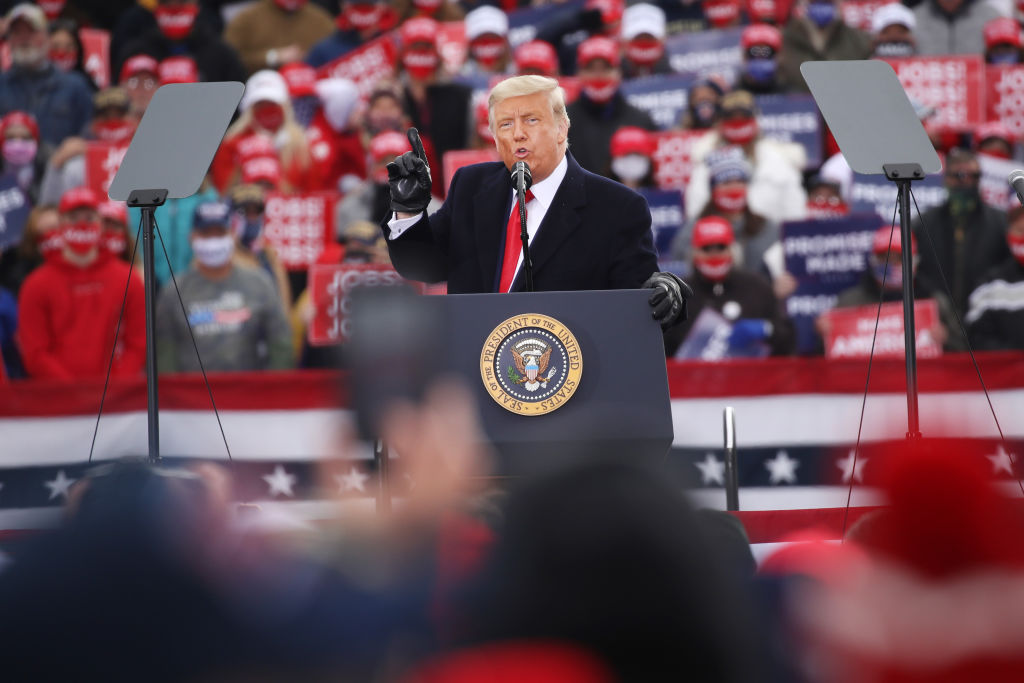
Donald Trump speaks at a rally on October 31, 2020 in Reading, Pennsylvania. (Spencer Platt / Getty Images)
Since Donald Trump came down his escalator in 2015, a debate has raged on the left about whether Trump is a “fascist” who threatened the existence of political democracy in the United States. Since Joe Biden decisively won the 2020 presidential election, a closely related debate has broken out about whether Trump’s many efforts to hold on to the presidency could reasonably be considered a “coup.”
Last week’s storming of the US Capitol, which appears to have been undertaken by a loose mob of ragtag QAnon conspiracy theorists, has sparked another round in this great, endless debate. Those who argued that Trumpism is a form of fascism saw in this “insurrection” a genuine threat to the United States’ democratic institutions.
But for those who, like us, considered Trumpism a manifestation of extant American trends, and Trump himself to be an ineffectual leader, the events of January 6 — while a disturbing escalation in the violent and erratic tendencies of Trump and his most hard-core supporters — were ultimately important because they demonstrated the weakness of Trump’s position.