200 Years of Anti-Caste Struggle
A new wave of protest suggests that the centuries-old struggle against the caste system in India may be entering a new phase.
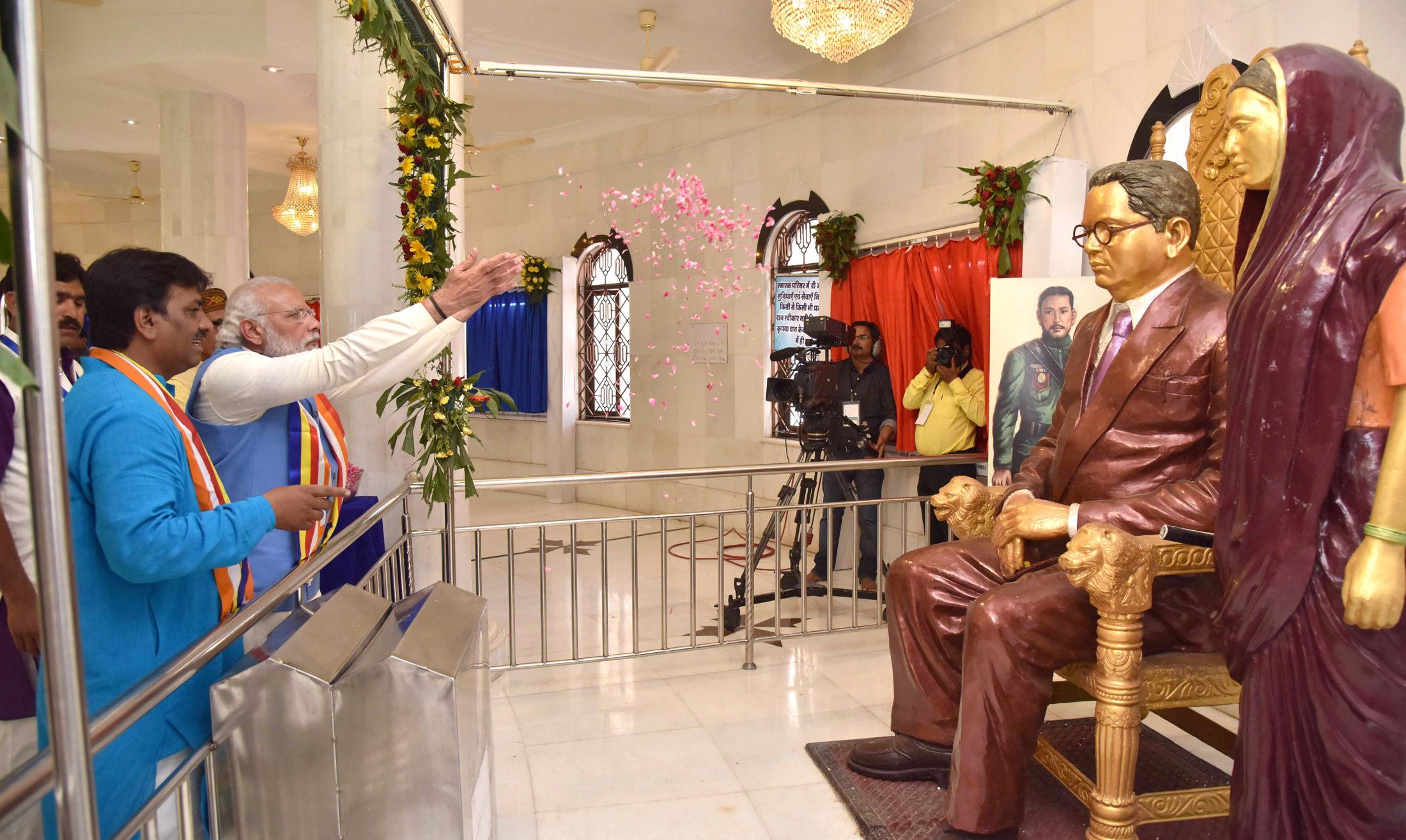
Prime Minister Shri Narendra Modi paying floral tributes to Bhimrao Ramji Ambedka Ambedkar, at Bhim Birthplace Memorial in Mhow, Madhya Pradesh on April 14, 2016.Narendra Modi / Wikimedia
As 2017 came to a close, India’s nationalist right had much to celebrate. In mid-December, the ruling Bharatiya Janata Party (BJP), which stands on the twin pillars of neoliberal economic policy and reactionary Hindu nationalism (Hindutva), convincingly won two state-level elections. This continued the party’s string of victories, with the BJP winning elections or forming ruling alliances in six of the seven states that held contested elections last year.
Meanwhile, Hindu nationalist groups, which have received the BJP’s explicit and implicit support, continue to terrorize non-Hindu communities — primarily Muslims and Christians. They are waging a real, violent war on Christmas that casts a dubious light on Donald Trump’s professed love of Hinduism.
But in the waning hours of 2017 and the initial days of 2018, a series of conflicts unfolded in the western state of Maharashtra that lay bare the contradictions of the nationalist right and suggested new alignments for progressive movements. The commemoration of a nineteenth-century battle triggered these events, but there is nothing arcane about the struggles surrounding this act of remembrance. Rather, the entire episode served as a pressing reminder that the fight for India’s future is also a fight for its past.