The 1970s: Decade of the Rank and File
The 1970s were a high-water mark for the US labor movement, with work stoppages, wildcat strikes, and sit-downs spreading up and down the country, involving workers in all industries.
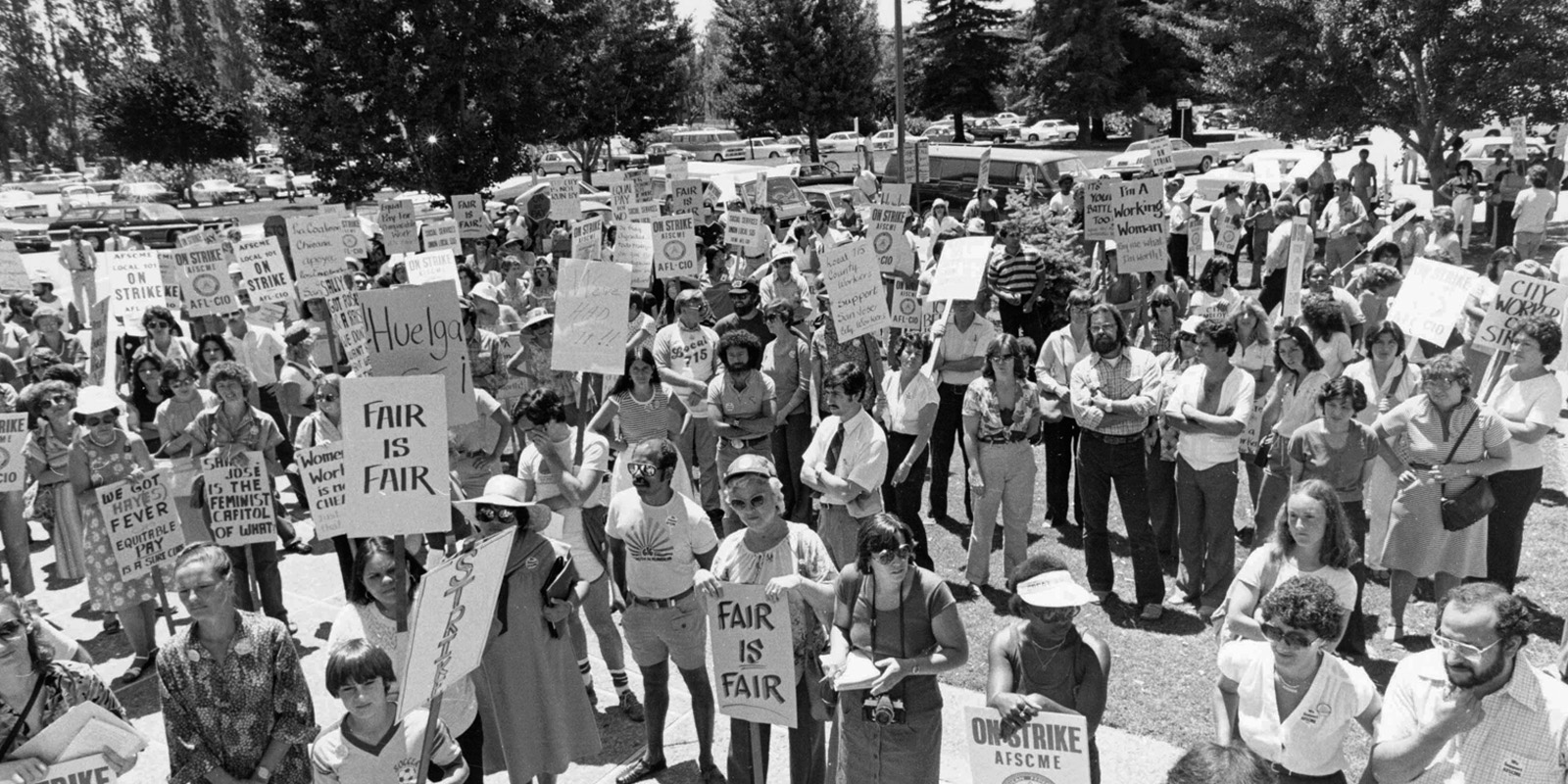
An AFSCME (American Federation of State, County and Municipal Employees) strike in San Jose, California, in the late 1970s. (Photo courtesy AFSCME)
The US Bureau of Labor Statistics, in its accounting of the year 1970, revealed an extraordinary statistic: there had been, in that year alone, 5,716 strikes, involving 3 million workers.
The year 1970 saw strikes in almost every employment category. Many, seen from the outside, were inconsequential affairs; others shook the nation. In Chicago, a truckers’ strike — “a revolt against the union leadership,” according to the New York Times — spread nationwide, including to Los Angeles and Cleveland, where roving pickets fought with police and national guardsmen. The Times reported that in Cleveland,
Strikers have set up a roving patrol system that they say can muster 300 men within an hour to stop any truck moving goods in the area. The strikers are allowing trucks carrying food, drugs and beer to continue, but they have become outraged when they have found food trucks carrying other cargo. There has been rock throwing, windshields have been smashed, tires slashed and air hoses cut.