When Arab-American Detroit Auto Workers Struck for Palestinian Liberation
In 1973, Arab-American workers in Detroit auto plants walked off the job in protest of the UAW’s investment in bonds from the state of Israel. The incident is little-remembered today, but it shows how workers can organize against racism and colonialism — including against the labor movement’s investment in the Israeli occupation of Palestine today.
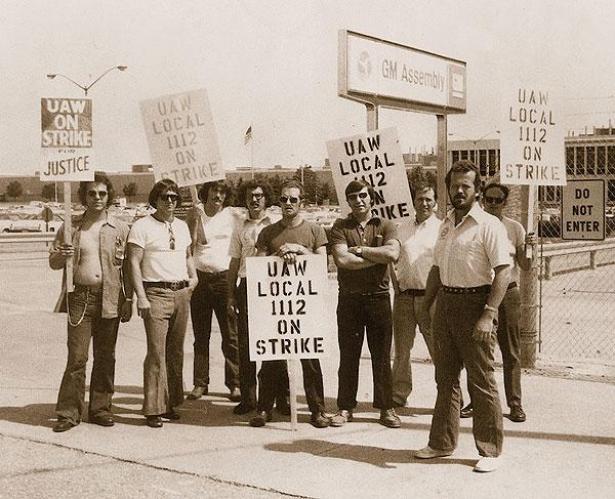
UAW Pickets at Lordstown, Ohio in 1974. (Walter P. Reuther Library, Wayne State University)
On November 28, 1973, nearly two thousand auto workers walked off the job at Chrysler’s Dodge Main assembly plant near Detroit, bringing production to a halt. The one-day strike was unusual in three respects.
First, it was a wildcat action, unsanctioned by the leadership of the workers’ union, the United Auto Workers (UAW). Second, the strike was entirely organized by recently arrived immigrants from Arab countries, who until then had been considered by corporate executives as some of the most “docile” workers in the auto industry. Third, the strike was an explicit protest against the UAW’s complicity in the colonization and occupation of Palestine, as well as an implicit assertion of dignity in the face of everyday racism and exploitation.
The unauthorized work stoppage that November was only the most dramatic example in a series of actions organized by the UAW’s Detroit-based Arab-American members in the early 1970s. Their efforts received scant attention from the press and labor movement at the time, and today have been all but forgotten.