50 Years Ago, Rank-and-File Reformers Took Over the United Mine Workers of America
The mine workers’ union’s conservative, corrupt leadership leadership was ousted by reformers 50 years ago this month. Today’s union reformers can learn from both their successes and their failures.
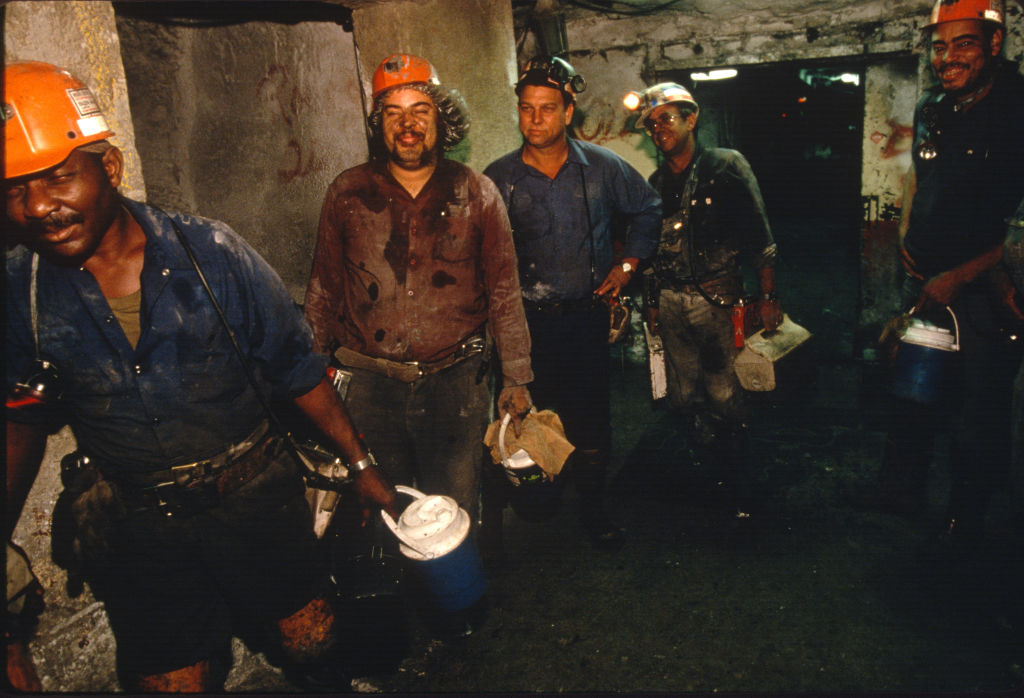
Union miners work at a coal mine in August of 1993 in Walker County, Alabama. (Andrew Lichtenstein / Corbis via Getty Images)
In December 1972, coal miners rocked the American labor movement by electing three reformers as top officers of the United Mine Workers of America (UMWA), a union which at the time boasted two hundred thousand members and a culture of workplace militancy without peer.
In national balloting supervised by the US Department of Labor (DOL), Arnold Miller, Mike Trbovich, and Harry Patrick ousted an old guard slate headed by W. A. (“Tony”) Boyle, the benighted successor to John L. Lewis, who ran the UMWA in autocratic fashion for forty years. Boyle’s opponents, who campaigned under the banner of Miners for Democracy (MFD), had never served on the national union staff, executive board, or any major bargaining committee. Instead, fifty years ago they were propelled into office by wildcat strike activity and grassroots organizing around job safety and health issues, including demands for better compensation for black lung disease, which afflicted many underground miners.
Today, at a time when labor militants are again embracing a “rank-and-file strategy” to revitalize unions and change their leadership, the MFD’s unprecedented victory — and its turbulent aftermath — remains relevant and instructive. In the United Auto Workers (UAW), for example, local union activists recently elected to national office — and fellow reformers still contesting for headquarters positions in a runoff that begins January 12 — will face similar challenges overhauling an institution weakened by corruption, cronyism, and labor-management cooperation schemes. Some UAW members may doubt the need for maintaining the opposition caucus, Unite All Workers for Democracy (UAWD), that helped reformers get elected, but the MFD experience shows that such political breakthroughs are just the first step in changing a dysfunctional national union.