A New Congressional Budget Office Study Shows That Medicare for All Would Save Hundreds of Billions of Dollars Annually
The most exhaustive study on Medicare for All just came out. Its conclusion: a single-payer system would guarantee health insurance to all people while reducing overall health spending by hundreds of billions of dollars every year.
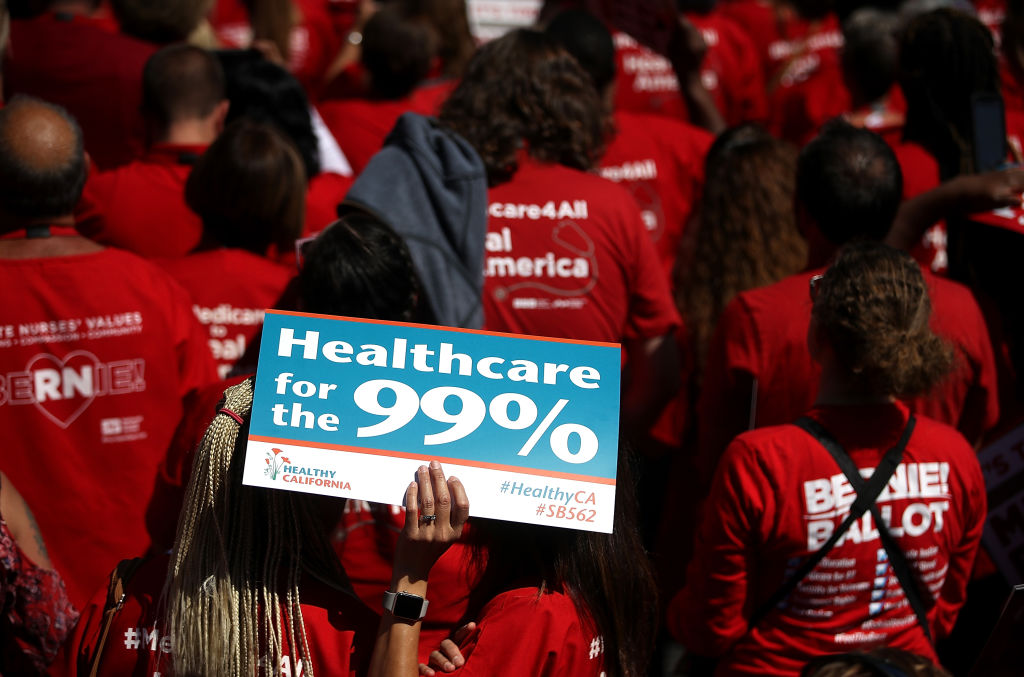
Supporters hold signs as US Sen. Bernie Sanders (I-VT) speaks during a health care rally at the 2017 Convention of the California Nurses Association / National Nurses Organizing Committee on September 22, 2017 in San Francisco, California. (Justin Sullivan / Getty Images)
Last week, the Congressional Budget Office (CBO) released an estimate of the cost of implementing a single-payer health insurance program in the United States. The CBO’s report is more exhaustive than any other recent study on the subject and concludes that replacing our current system with a single-payer system would insure every American while reducing overall health spending in the country.
Modeling the cost of a single-payer program is relatively straightforward. You begin with the status quo health care system and then make educated guesses about the following questions:
How many more units of health care services will be demanded and supplied when price barriers are removed?
How much more efficient will health insurance administration be after enrollment and payment systems are radically simplified?
How much money will be saved by reducing the payment rates for health care providers and drug companies?