Luxury Sneaker Markets Are a Preview of Capitalist Dystopia
The multibillion-dollar luxury sneaker market increasingly seems like something out of a sci-fi novel. But for all its bizarre quirks, there’s no better illustration of the way modern capitalism works, and the direction that it’s going.
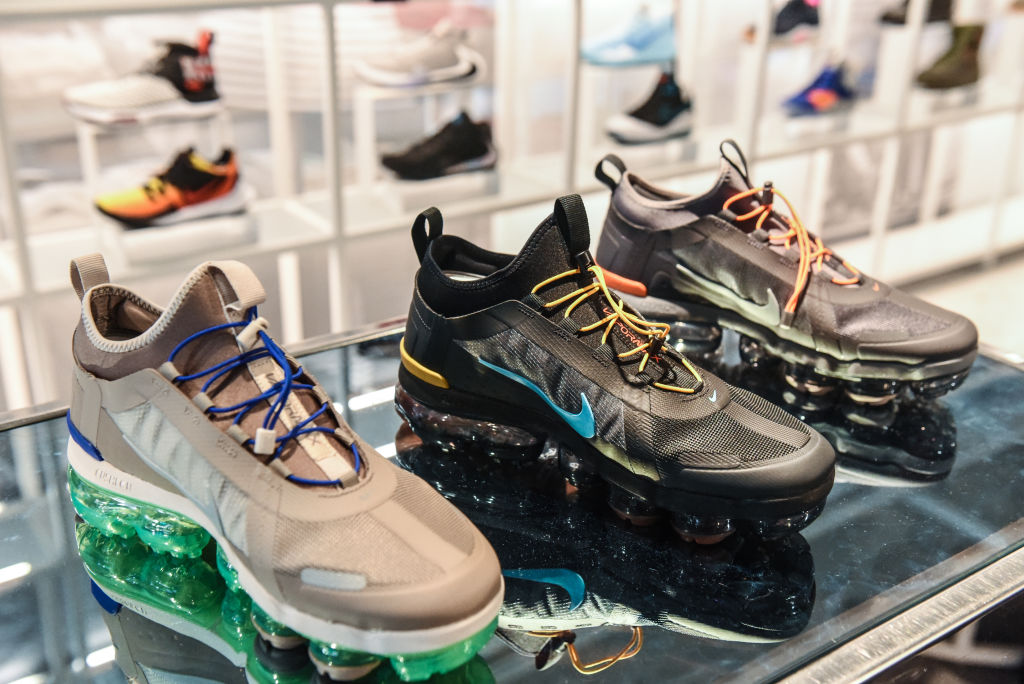
Nike sneakers are seen on display at the Nike flagship store on Fifth Avenue, on December 20, 2019 in New York City. (Stephanie Keith / Getty Images)
PLUS, a new pop-up store in Toronto’s Yorkdale mall, looks like any other high-end shoe boutique from the outside. Pop-up sneaker stores are easy to overlook, but they’re proliferating in malls across North America where an array of mom-and-pop stores, with names like HypeFetish, Heat Vault, and Hype Store, trade in the same kind of shoes as PLUS. Many shoppers will encounter these stores while looking for a new pair of runners, balk at the prices, and never think of them again.
These low-key shops, however, are part of an enormous, burgeoning sneaker resale industry. It fuels a vast economic machine generating buyers and sellers, investors and authenticators, culture and journalism. Sneaker markets show us the current state of capitalism in microcosm — and give us an excellent idea of where it’s headed.
There’s Gold in Them Thar Shoes
The popularity of sneaker collecting dates back to the launch of the coveted Air Jordan 1 in 1985. For many young people — especially young African Americans — it seemed to offer an accessible, obtainable version of luxury and status. Sneakers even came to embody black expression in an era when the fashion industry was hostile to black culture.