Chile Awakens
Chile’s mass mobilizations challenge the neoliberal model and have raised expectations for millions of Chileans. With the country’s explosion of protests in recent weeks at its back, the fledgling left coalition could fight back against the decades of neoliberalism that have immiserated so many Chileans.
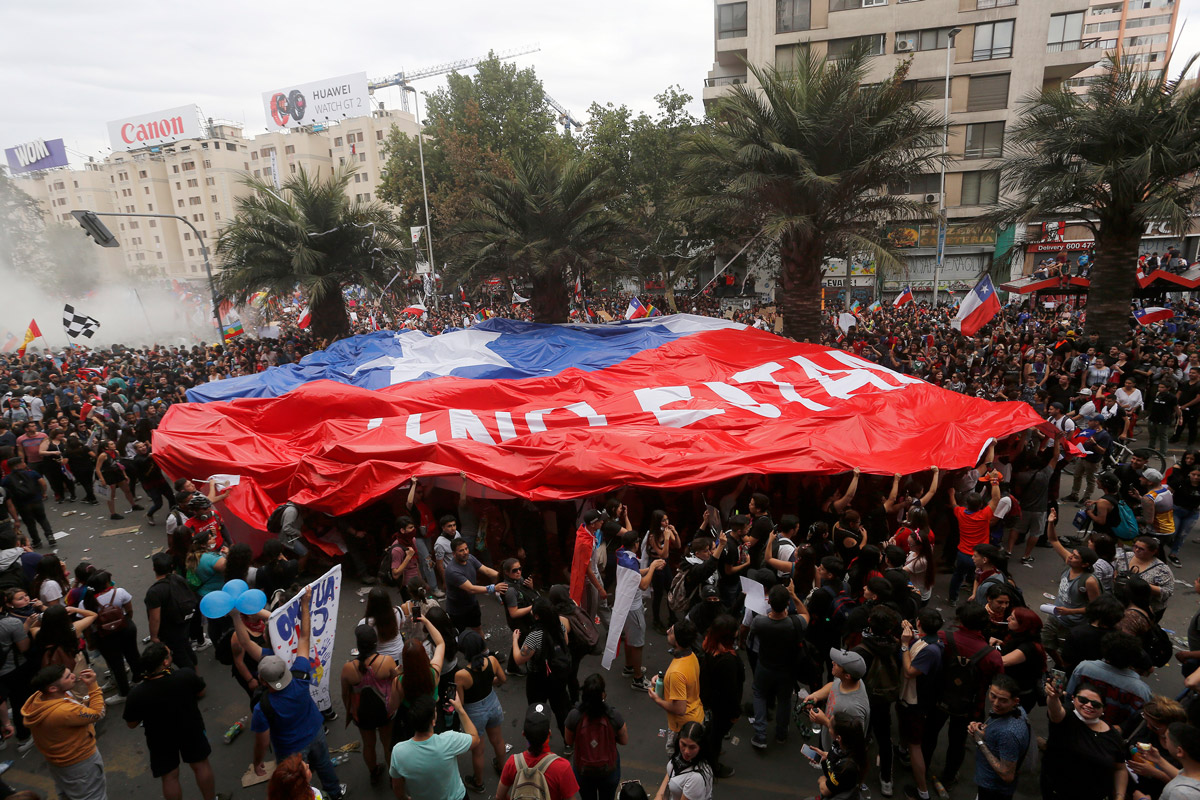
A Chilean flag is displayed during protests against President Sebastián Piñera’s government on October 25, 2019 in Santiago, Chile. (Marcelo Hernandez / Getty Images)
Last week, in response to a four-cent rise in the price of the metro fare, mass protests fed by dissatisfaction with thirty-plus years of post-Pinochet neoliberal consensus erupted in Santiago and then across Chile. In response, students organized mass fare dodging, the government escalated with heavy police presence, and mass protests ensued. The right-wing government of President Sebastián Piñera reacted swiftly and severely, imposing a state of emergency and toque de queda (curfew), a legacy feature of the 1980 Chilean constitution deeply reminiscent of the most turbulent days of the military dictatorship.
The youth of Chile, and in particular students, have been at the forefront of popular resistance, not just in the present moment, but as far back as the mass mobilization of students in 2007 and 2011 against privatization and the for-profit education system. These earlier mobilizations led to the formation of the Frente Amplio (or “Broad Front”), a broad left electoral coalition composed of distinct left parties and social movements whose principal aim is to challenge the neoliberal consensus.
By forwarding a platform including a new constituent assembly, the public ownership of water, and an end to Chile’s privatized pension system, Frente Amplio surprised Chile’s political elite by winning twenty seats in the Chamber of Deputies, one Senate seat as well as four mayoral races (including Valparaíso, Chile’s largest city outside of Santiago), and dozens of seats in municipal governments in 2017. But the most important figurehead of the election was Frente Amplio’s presidential candidate Beatriz Sánchez, who despite polling at 9 percent finished the first-round presidential election with 22 percent of the vote and came within 150,000 votes of passing to the final round, shocking the Chilean political establishment.