The Right-Wing Violence Trump Has Encouraged Has Deep Roots in American History
The far-right violence that Donald Trump has stoked has deep roots in US history. Kicking him from office won’t change that — but it would deal a blow to right-wing vigilantism.
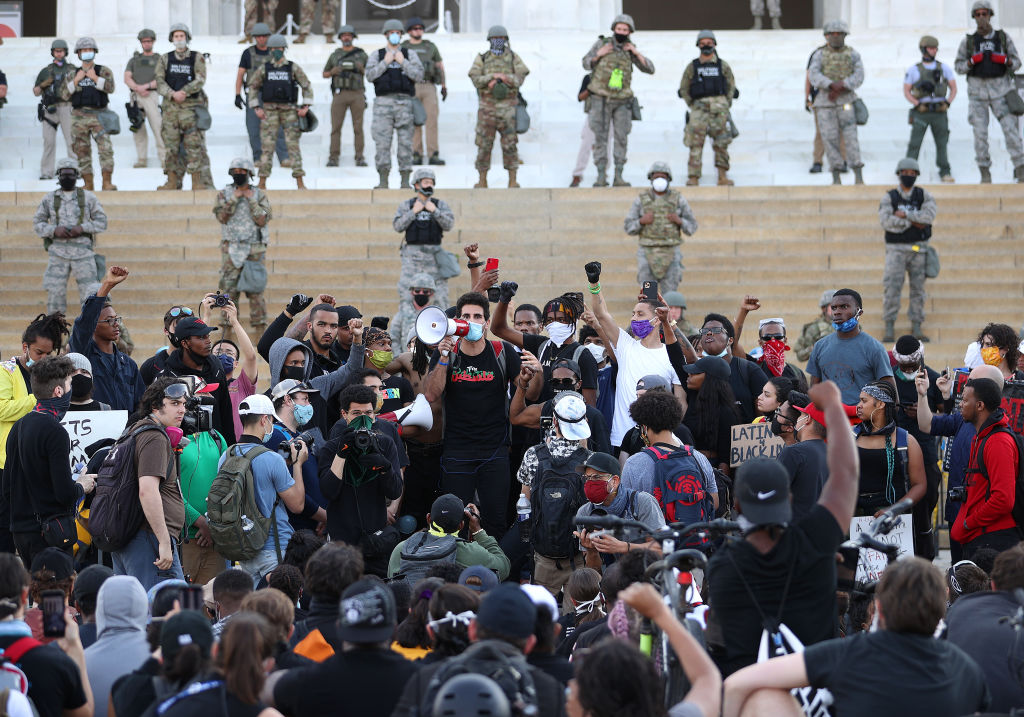
Law enforcement officers stand on the steps of the Lincoln Memorial as demonstrators protest against police brutality and the death of George Floyd, on June 2, 2020 in Washington, DC. Win McNamee / Getty
Throughout his reelection campaign, Donald Trump and his allies have aggressively pushed law-and-order rhetoric, conjuring up lurid fantasies about “antifa” violence while encouraging extralegal actions by vigilante groups like the Proud Boys. They’ve sought to exploit paranoid fears of roving gangs while appealing to so-called patriotic militias. And they’ve defended police brutality and attacked Black Lives Matter (BLM) protesters even as they champion right-wing groups that defy government mandates for masks and other protective measures.
Given the robust public support for the Black Lives Matter movement, Trump and his supporters have appeared desperate at times. Yet Trump’s belligerence, no matter how unpopular, has emboldened his most extreme backers and found support among cops on the beat. In addition to facing brutality from law enforcement, BLM protesters have endured intimidation and violence from weapon-carrying, back-the-blue vigilantes in major cities (Austin, Louisville, Philadelphia, Portland) and small communities (Kenosha, Wisconsin, population 100,000; Weatherford, Texas, population 25,000). Counterprotesters have celebrated the actions of the police while terrorizing protesters.
Historically, reactionaries and vigilantes have been especially effective in imposing their will in small and medium-sized communities compared to larger cities, where activists enjoy access to networks of like-minded comrades. The July 25 episode in Weatherford, a community thirty miles west of Fort Worth, is a case in point — underscoring the historic complicity of law enforcement in vigilantism, even though its perpetrators, unlike Kyle Rittenhouse in Kenosha, did not resort to deadly force.