The British Left Could Benefit From a Few Lessons From the French Left
Five years after their electoral breakthroughs, the projects led by Jeremy Corbyn and Jean-Luc Mélenchon have gone in opposite directions. The British left would be in a stronger position today if it had displayed some of Mélenchon’s confrontational grit.
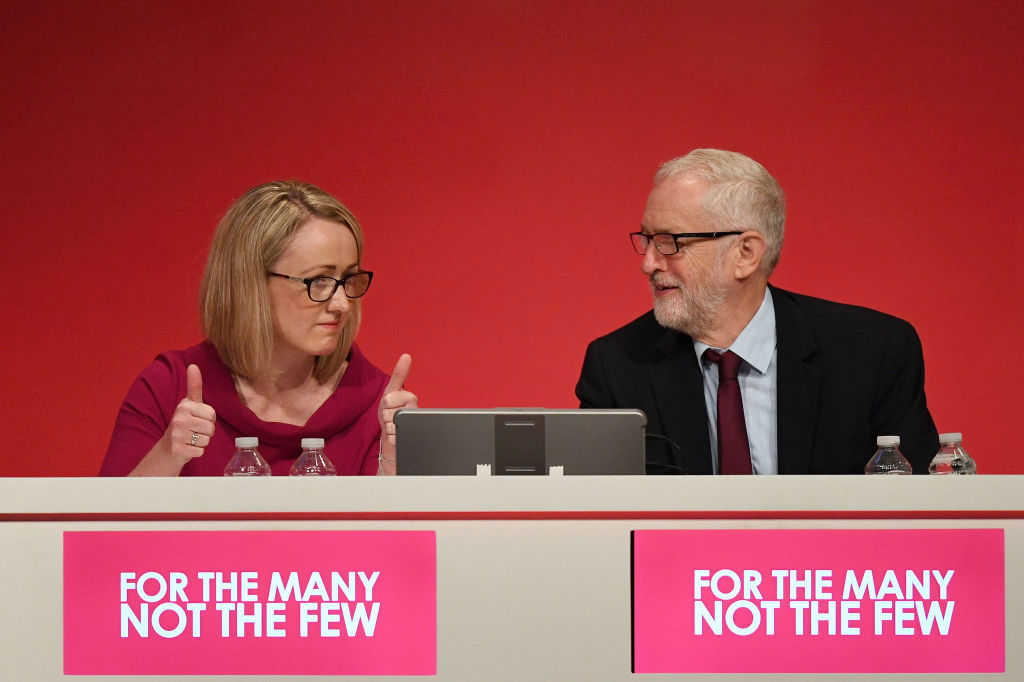
Rebecca Long-Bailey and Jeremy Corbyn on the fourth day of the Labour Party conference on September 24, 2019 in Brighton, England. (Leon Neal / Getty Images)
Five years ago, in elections held barely a month apart, the Left took a big step forward on both sides of the English Channel. First Jean-Luc Mélenchon won nearly one-fifth of the vote in the first round of the French presidential election — the best performance by a radical-left candidate since 1969. Then Jeremy Corbyn led the British Labour Party to its highest vote share in almost two decades, with the biggest increase in support for either of Britain’s major parties since 1945.
The current state of play for the movements that came together around Mélenchon and Corbyn could not be more different. The French politician surpassed his 2017 result in this year’s presidential poll, with 22 percent of the vote. He went on to lead a left-wing alliance that outperformed Emmanuel Macron’s governing party in the first round of June’s legislative elections. Mélenchon’s party, La France Insoumise, is clearly the most dynamic element in that alliance.
Corbyn, on the other hand, is no longer even a member of Labour’s parliamentary group, having been excluded by his successor, Keir Starmer. The former leader’s suspension is one aspect of Starmer’s unrelenting drive to exclude left-wingers from all positions of influence in the party, which has escalated to psychological warfare in an effort to remove one left-wing MP, Apsana Begum.