The Left and the Climate Crisis After the Pandemic
In the early stages of the COVID-19 pandemic, many hoped it would contain an inadvertent silver lining, in the form of reduced carbon emissions. But the real lesson of the past few months is now clear: we can’t stop global warming without radical systemic change.
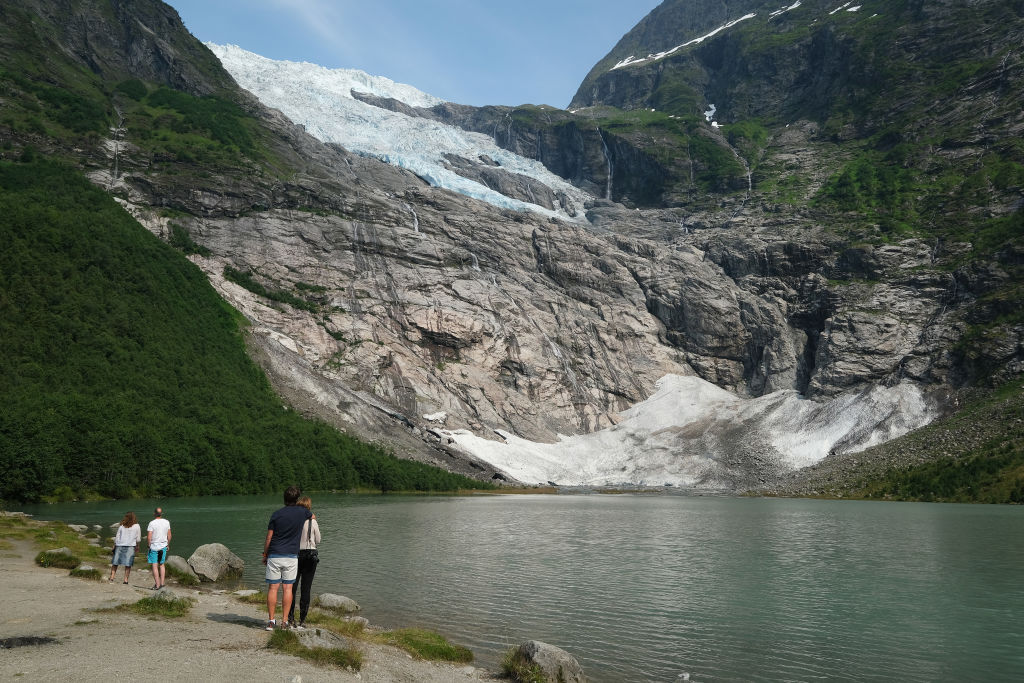
Europe’s biggest glacier, the Jostedal glacier, has gone through a natural process of expansion and recession over the past centuries, yet global warming has accelerated its melting over recent decades. (Sean Gallup / Getty Images)
The last eighteen months have seen the climate crisis rise to the top of the political agenda. The climate strikes spearheaded by a new generation of young activists have challenged the complacency of political elites. Scientific research on conditions in the Arctic and Antarctic have driven home the message that climate change is already happening and its consequences may exceed even the most alarming predictions.
When the COVID-19 pandemic hit the world earlier this year, many people wondered if it would bring an unintentional “silver lining” in the form of reduced carbon emissions as a result of lockdown measures. But we now know that any such side effects will be completely insufficient to bring down emissions by the necessary amount, in the absence of far-reaching structural change to the world economy. But will the pandemic make it harder to bring about that change?
Adrienne Buller of Common Wealth spoke to Jacobin Radio’s Long Reads podcast for a wide-ranging discussion of the climate crisis, the pandemic, and the responsibilities of the Left. This interview, which can be heard here, has been lightly edited for brevity and clarity.