Nigeria’s #EndSARS Protests Aren’t Just Opposing Police Brutality — They’re Opposing Neoliberalism
The #EndSARS movement has convulsed Nigeria for weeks, demanding an end to police brutality. But the protesters have something else in their crosshairs: the unequal, austerity-ridden status quo and the political class that defends it.
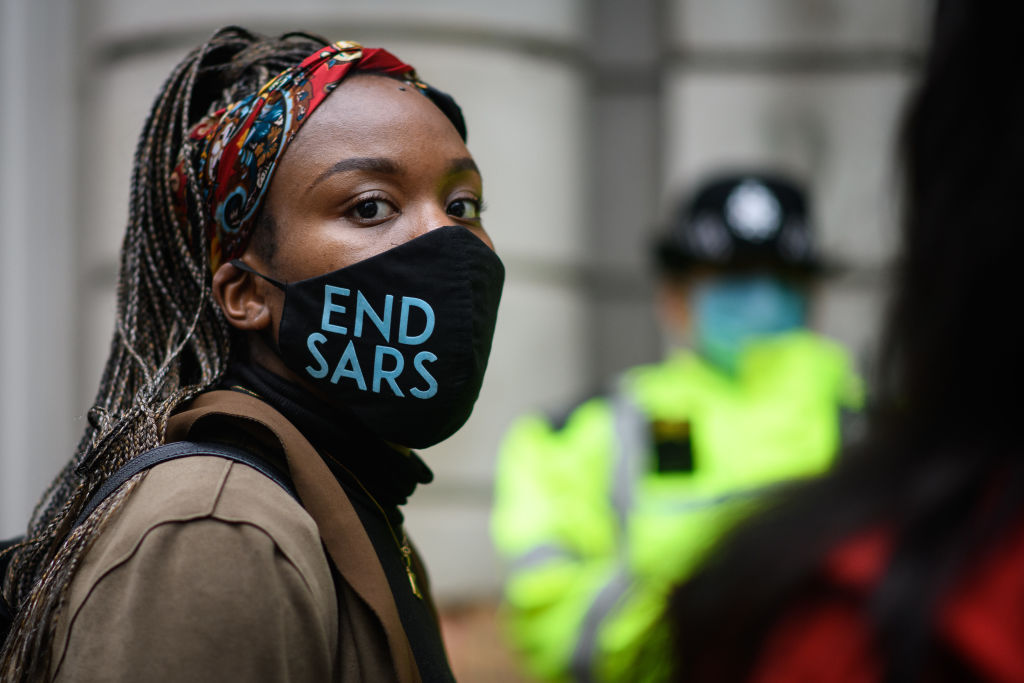
A woman wearing an “END SARS” face mask outside the Nigerian Consulate during a demonstration in London, England. (Photo by Leon Neal/Getty Images)
In October, protests erupted in Nigeria calling for the government to #EndSARS, the Special Anti-Robbery Squad. The federal policing unit was established in 1992 to respond to a wave of crime in Nigeria’s large cities, like Lagos and Abuja. But as time went on, the plainclothes police were accused of harassment, torture, and extrajudicial killings, mirroring the gangs they were supposedly meant to be targeting and brutalizing Nigeria’s urban youth in particular.
On October 11, in a concession to the historic protests, Nigerian president Muhammadu Buhari announced he would disband SARS. But the youth-led demonstrations have persisted, and despite government repression, the movement has come to represent not simply a challenge to police violence, but a deeper frustration with the unequal, austerity-ridden, neoliberal status quo and the political class defending it.
Late last month, as part of the new video series “AIAC Talk,” Africa Is a Country’s Sean Jacobs and William Shoki spoke with Sa’eed Husaini, a Jacobin contributor and Lagos-based socialist activist, about the roots of SARS in neoliberal “structural adjustment programs” and how the historic protests are upending assumptions about what’s politically possible in Nigeria. Their conversation has been condensed and edited for clarity.