Friedrich Engels, a Thinker for Today
Two hundred years since his birth, Friedrich Engels is often considered a man rooted in the culture of 19-century thought. But if not all his predictions ring true, his critique of the rising industrial capitalism offers penetrating insights into our own present.
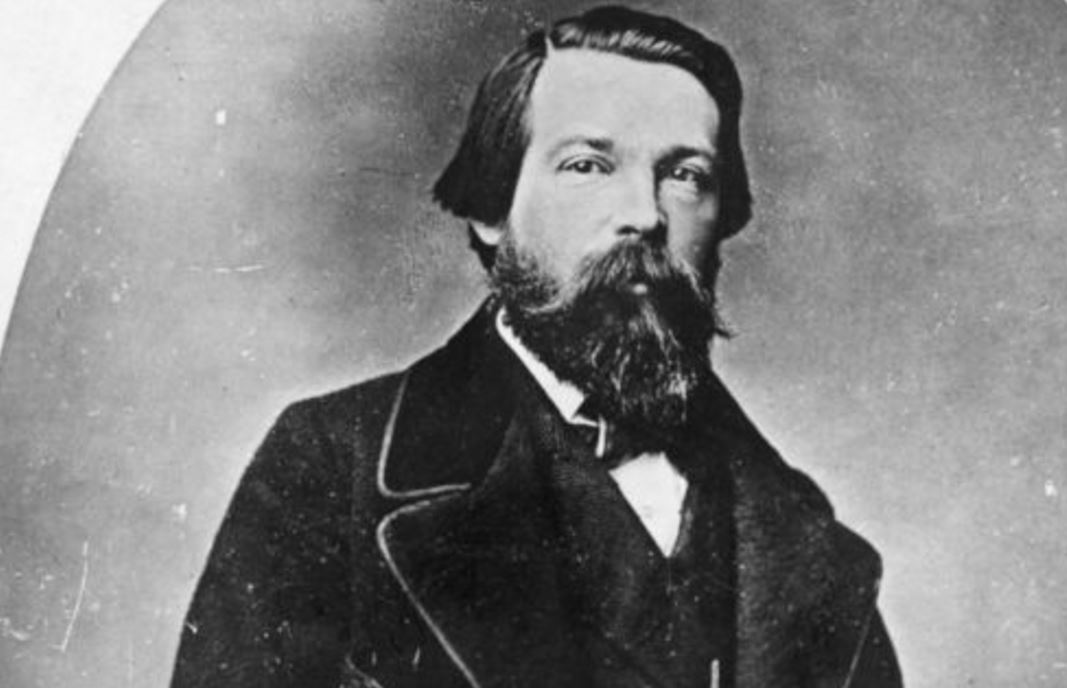
Friedrich Engels was born on November 28, 1820.
Friedrich Engels was many things: a soldier, a journalist, a historian, an economist, a capitalist, and a communist revolutionary. Many stories could be told about his life, from his taste for fox hunting with England’s ruling elite to his affairs with Irish proletarian women.
Whoever is interested in the all-too-human aspect of this “frock-coated communist” will find a rich body of literature. But rather less examined is whether Engels’s particular critique of capitalism still holds. Two hundred years from his birth, what can the Left actually learn from Engels’s writings?
Even to pose the question is to break ranks with the main ways in which Engels’s legacy has been treated. In the countries of Soviet-style “actually existing socialism,” he was treated as a spiritual founding father of the nation — indeed, co-inventor of a state ideology of “historical materialism.” In the West, conversely, he was always suspected of complicity in the crimes committed in his name, from the gulag to the Berlin Wall. Today’s liberal thinkers usually adopt something of a middle position, honoring his “concern for social inequality” while remaining dubious about his commitment to the “dictatorship of the proletariat.”