Across the World, Sports Stadiums and Arenas Are a Gigantic Swindle
From Calgary to Los Angeles, everyone knows that sports arenas are a bad deal for cities. But the problem isn’t just the use of public subsidies for private profit: the whole multibillion-dollar sports venue industry is built on the backs of poorly treated, underpaid workers.
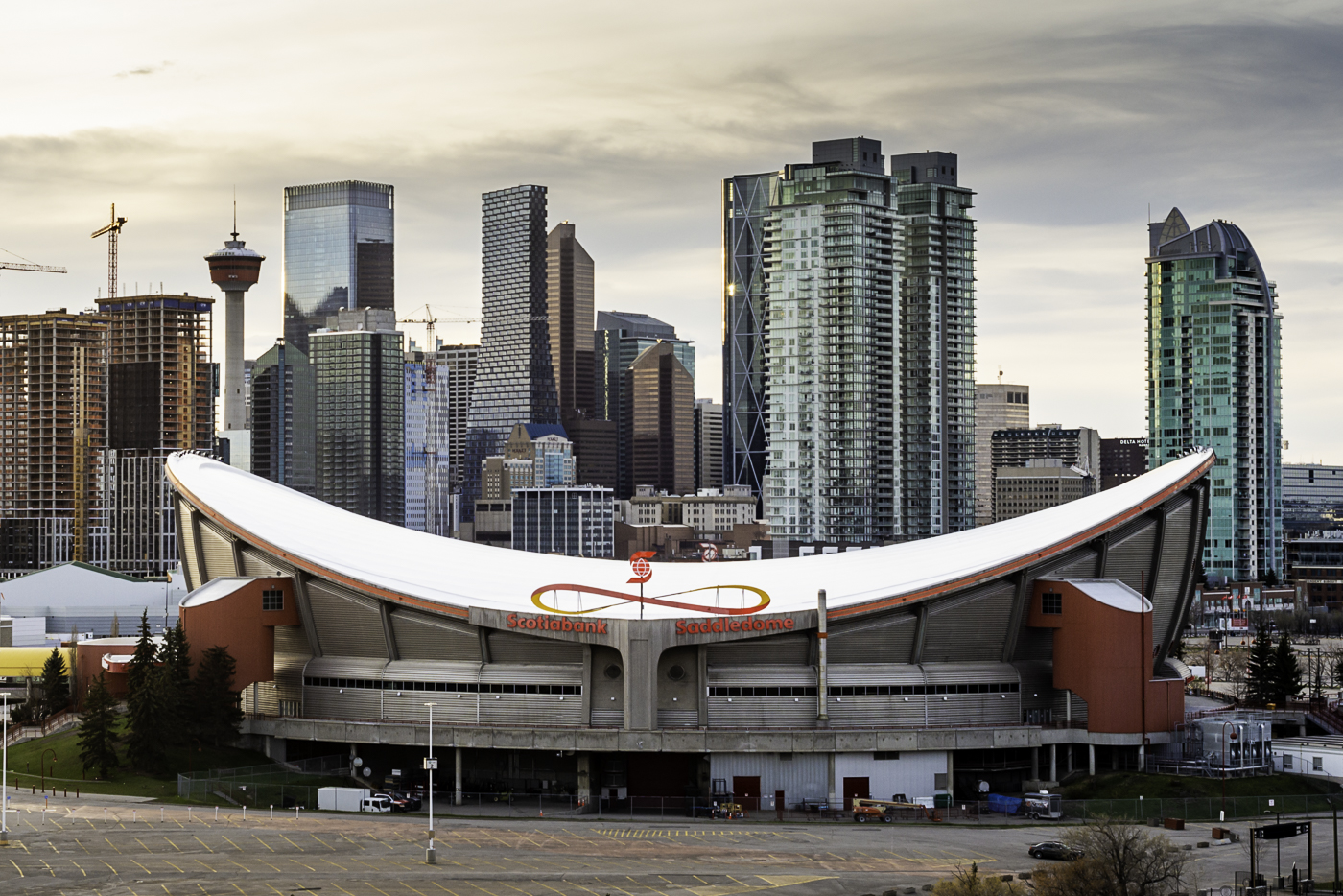
Scotiabank Saddledome, the home arena of the NHL team the Calgary Flames, located in Calgary, Alberta, Canada. (Wikimedia Commons)
The North American sports market, worth $71 billion, is limping forward in spite of COVID-19 being transmitted among rosters and fans. Teams and leagues have made token gestures to assuage fears, from keeping players in isolated, lonely bubbles, to high-tech, low-impact, and extremely invasive forms of hygiene theater. However, there’s one spectator sports mainstay that can’t return to normal: the idea of fans enjoying games in stadiums and arenas.
While full attendance is on indefinite hiatus at all major sports arenas, and the nature of mass gatherings is fundamentally changing, new venue construction projects are still being built across North America. It clearly makes little sense, in the era of COVID-19, to go on funding new arenas and stadiums. But the lack of economic benefit these projects actually offer to the communities in which they’re built reveals something deeper than the waste of capital. The modus operandi of sports venue development hinges on the disposability of service labor.
You Can Keep Your Trojan Horse, Thanks
There’s a near-universal playbook when it comes to venue construction. When a lease on a current venue expires, or the building ages to a point that repairs become costly, owners ask the city to foot the bill for a new one, or else threaten to move. Owners cite the economic impact of capital flight on municipalities, speaking of job losses and spillover effects on business. And they claim that economic growth results from the construction of new venues through multiplier effects on local spending and investment.