For Rudolf Hilferding, Socialism Was About Freedom
Austrian socialist Rudolf Hilferding, author of the magisterial Finance Capitalism, used the tools of Marxism to develop a rigorous understanding of the changing capitalist economy while making the case for a socialism that put freedom and democracy at the center of the project.
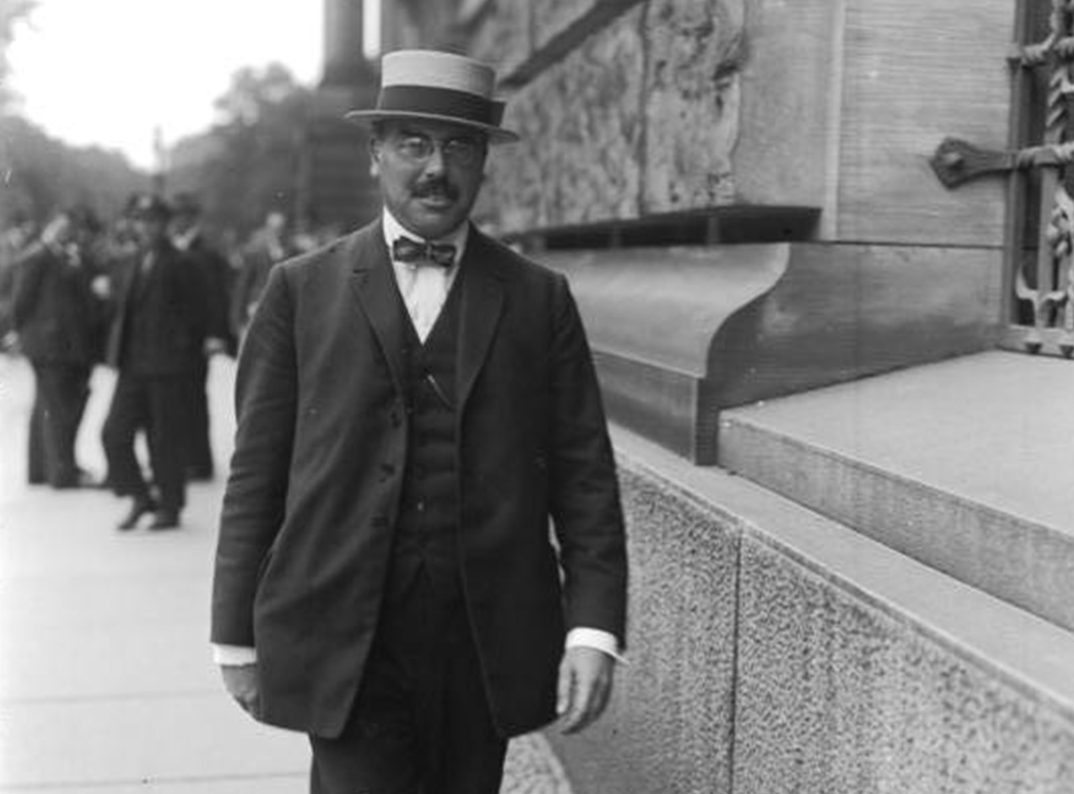
Rudolf Hilferding in 1923. Photo: Bundesarchiv Bild
In April 1902, Rudolf Hilferding, an unknown, twenty-four-year old Austrian socialist, came to the attention of Karl Kautsky, the editor of European socialism’s preeminent theoretical journal, Die Neue Zeit (The New Age), and the movement’s leading theorist. Hilferding had just completed medical school, but his real interest lay in political economy, and he hoped Kautsky would affirm the value of his contribution to the field. He had sent Kautsky an article that he intended as a refutation of Karl Marx and the Close of his System, a work where Austrian economist Eugen von Böhm-Bawerk had attacked the basic premises of Marx’s Capital. While Kautsky did not publish the article, he was nevertheless impressed. He invited Hilferding to contribute regularly to the journal.
Hilferding seized the opportunity. He wrote a number of insightful essays and book reviews on economic matters (including value theory and the protective tariff) and on political questions (such as the general strike). Struck by his intellectual acuity and prodigious output, Kautsky convinced Hilferding to abandon medicine and devote himself to political economy full time. By 1906, he had arranged for the young socialist to teach political economy at the German Social Democratic Party’s school for activists in Berlin.
Hilferding quickly made Kautsky proud. He expanded his critique of Böhm-Bawerk in into a book; was appointed the foreign editor of Vörwärts, the SPD’s flagship daily, in 1908; and, most important, published his masterpiece, Finance Capital, in 1910, transforming him into one of European Social Democracy’s most important intellectuals. It was a status he would retain until his death at the hands of the Nazis in 1941.